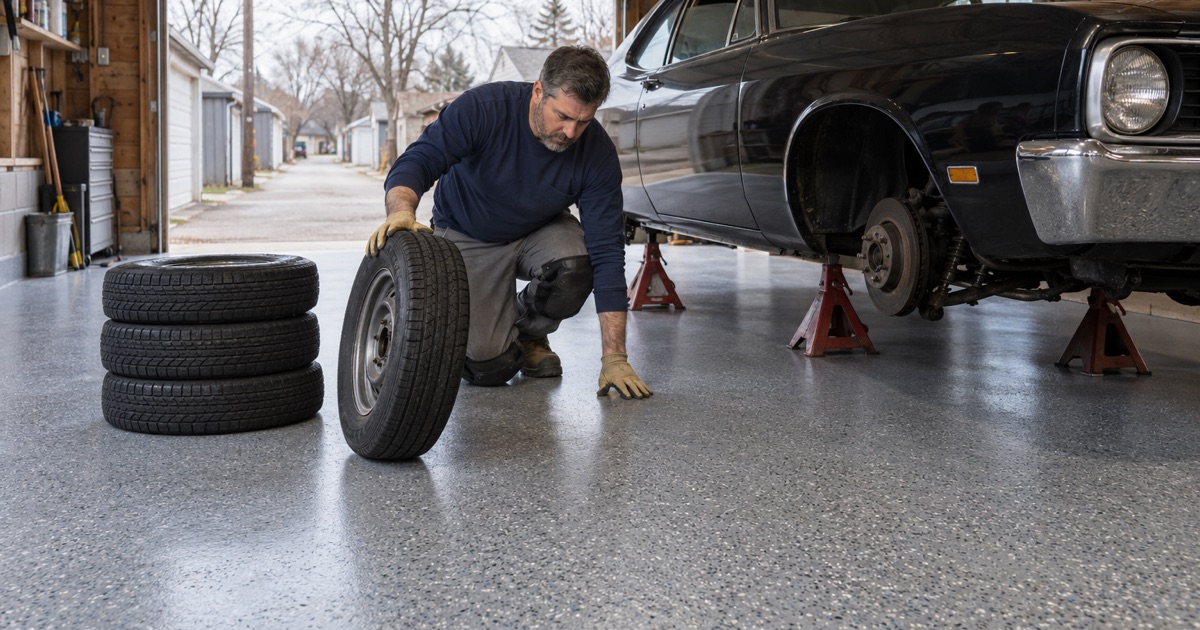
New Berlin Epoxy Flooring plans epoxy flooring in Whitefish Bay with more than 20 years in the trade behind it, and the garages we see here often have an unusual job to do. Many of them hold a car that is not going anywhere soon: a restoration underway, a vehicle waiting on parts, or one laid up until spring. The floor under that car has to handle months of slow drips and a schedule that cannot simply push the car outside.
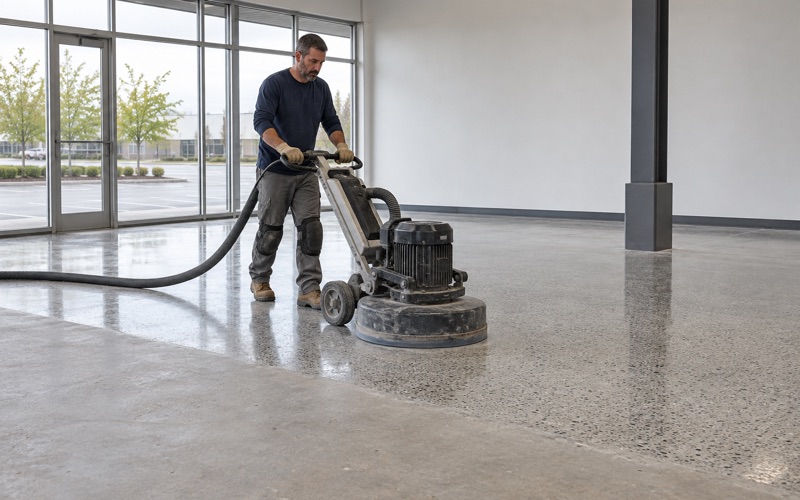
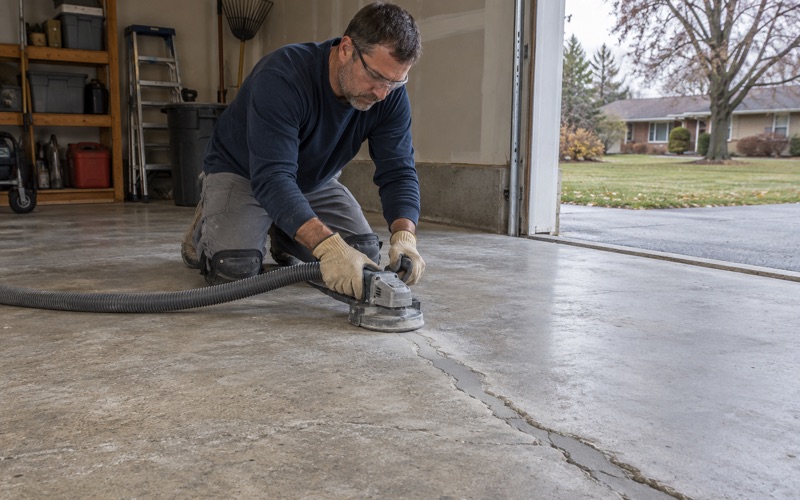
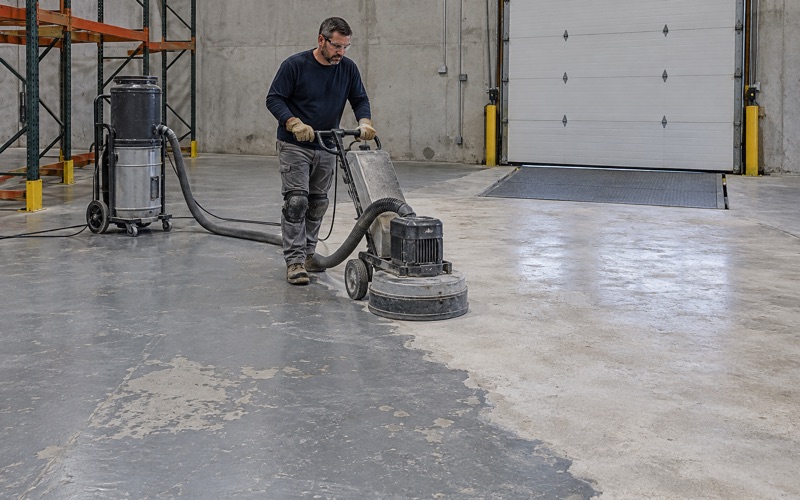
Every slab we coat is opened mechanically first, with a diamond grinder or a shot blaster, because acid etching leaves too much to chance on old concrete. Moisture testing is part of the written scope from the start rather than an upsell after something blisters. We also look hard at cracks, joints and any previous coating before quoting, and we say so when a slab needs repair before it should carry a new system.
The proposal you receive names the product, the system build and the finished thickness, so the floor that goes down can be checked against the floor that was quoted. Before anything is signed, we walk through the warranty exclusions, starting with moisture coming up from below. That way the plan for your garage, your car and your calendar is settled on paper before the grinder arrives.
Whitefish Bay keeps project cars indoors
What Section 16-22(T) actually says
Whitefish Bay’s zoning chapter carries a list of prohibited uses in Article IV, Sec. 16-22, and one entry speaks directly to anyone working on an old car. Item (T) bars the parking, leaving or storing of any partially dismantled, inoperable, rusted, wrecked, junked or unlicensed motor vehicle, or one with expired license plates, on any premises. The exception is a motor vehicle kept in a garage, or one in the custody of the Village.
In practice, a project car on a Whitefish Bay lot has one lawful home, and it is indoors. The code defines a garage as completely enclosed by walls, windows, doors and roof, so a carport or a tarp over the driveway does not qualify. If the car is unplated, on expired tags or partly apart, it lives on the garage slab for as long as the project lasts, whether that is one season or several.
Trucks stored only inside a building
Item (H) of the same section adds a second indoor rule: the storage or parking of trucks is barred except in a building lawfully erected for that purpose. A homeowner keeping a work truck or a pickup project on the property is again looking at the garage. Between the two items, the vehicles these rules cover spend their downtime on concrete under a roof rather than out on the driveway in the weather.
What the rule does not say
Neither item says anything about floors, coatings or how a garage should be finished. The ordinance governs where a vehicle may be kept, and that is all. Our point is a practical one: when the code sends a long-term vehicle into your garage, that slab becomes a work surface and a storage surface at once, and it is worth building it for both of those jobs.
We read the zoning text itself and have not reviewed how the village enforces it, so we will not tell you what a violation costs or how long a car can sit outside. If you have a question about your own situation, Building Services at Village Hall, 5300 N. Marlborough Drive, is the office to ask. Our job is the floor, planned so you never need to test the rule.
Looking for epoxy-flooring closer to Brown Deer? See Epoxy-Flooring Services in Brown Deer.
A car that sits for months: drips, drained fluids and parts
Drips that dwell instead of getting wiped
A daily driver drips a little and leaves, and the spot gets wiped on Saturday. A car laid up for a restoration drips onto the same few square feet for weeks, and nobody may notice until a pan comes off. Oil, coolant, transmission fluid and brake fluid all get long contact time with whatever is under them, which is a far harder test than the splash-and-wipe most garage floors see.
That is why we talk about dwell before we talk about color. Manufacturers publish chemical resistance charts for their own products, and the results vary from one system and one fluid to the next. We choose a build whose maker documents performance against the fluids your project will drop, and we tell you which spills should still be cleaned up promptly rather than left to sit.
Drained fluids, drip trays and parts on the floor
A restoration usually involves draining systems on purpose. Fuel, oil and coolant come out into pans, and parts come off greasy and get set down wherever there is room. A coated floor makes that mess visible and easy to recover, which matters when the garage is the only lawful place the car can be, because spills wipe up instead of soaking into bare, porous concrete.
We still recommend drip trays under the engine and transmission of a car that will sit for months, and a mat under any parts washer or bench. A coating is a cleanup surface, not a reason to leave a puddle under a car through the winter. Keeping solvents and fuels in closed containers protects the topcoat as much as it protects the house and the people in it.
Building the system for long dwell and easy cleanup
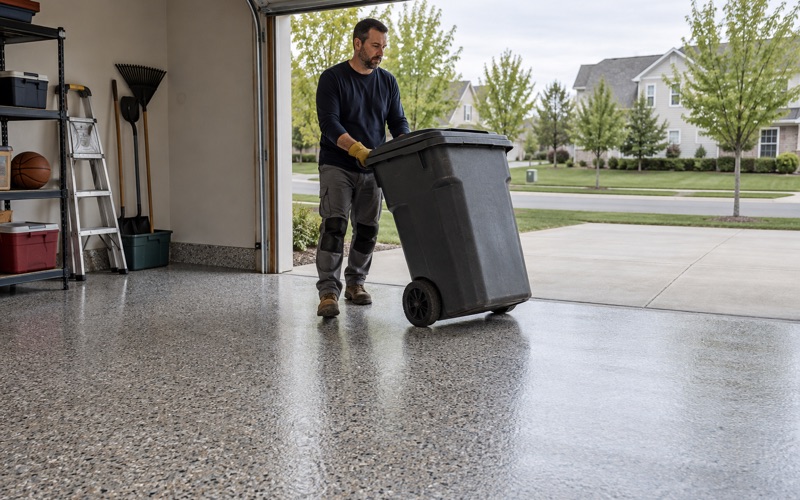
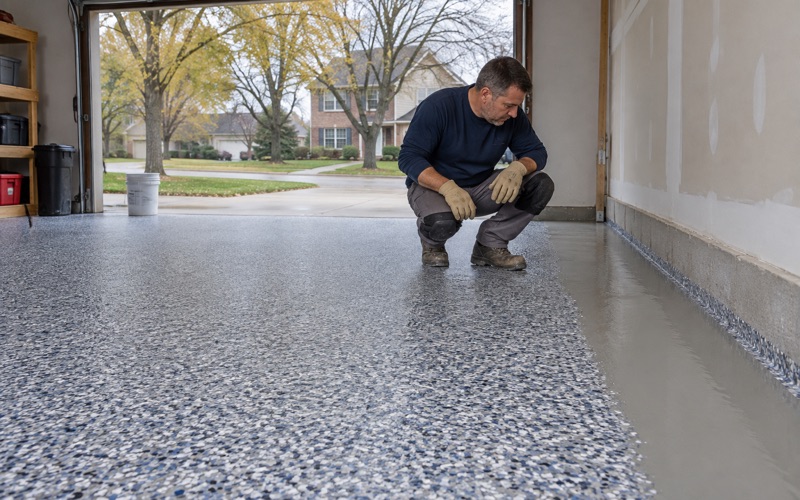
For a long-term vehicle floor we usually start with a 100% solids epoxy base over a ground profile in the ICRI CSP range the product calls for. A vinyl flake broadcast hides small stains and adds texture underfoot, and a polyaspartic or polyurea topcoat seals it. That build also guards against hot tire pickup when the car finally runs again and comes back in warm.
The garage still has to deal with winter. Road salt and calcium chloride brine track in on any other car that shares the space, and those deicers sit in puddles beside the project for days. We set the topcoat thickness and the texture with both jobs in mind, so the bay holding the restoration and the bay holding the daily driver are one floor, not two compromises.
Where the car goes while the floor is done
No easy driveway option
Here is where Whitefish Bay differs from most places we work. In many towns, a homeowner rolls the car onto the driveway for a few days and the floor gets done. If the car is unplated, on expired plates, inoperable or partly dismantled, Section 16-22(T) does not list the driveway among its exceptions, so that simple move is off the table for planning purposes.
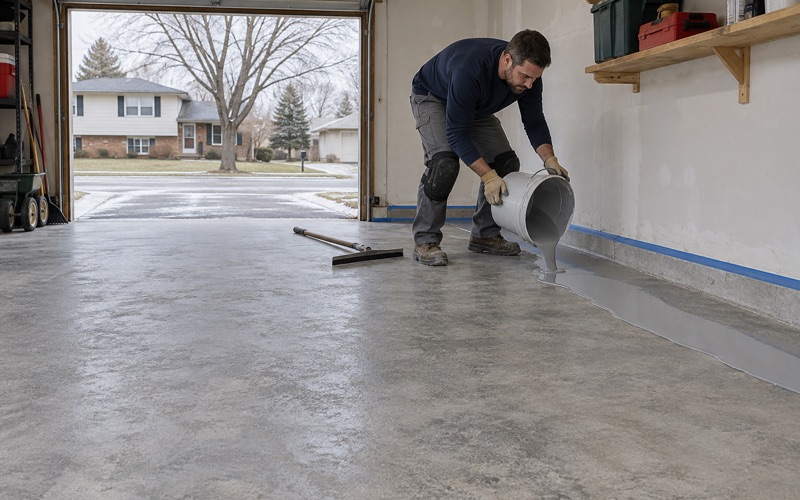
A floor job also takes longer than people expect. Grinding, crack repair, base coat, broadcast and topcoat happen over several days, and the slab then needs time to cure before it carries a vehicle’s weight on its tires. The car needs a lawful place to be for that whole span, not just the morning of the grind, and we build the span into the schedule we hand you.
Towing the project off-site
When the car is already in the garage and cannot be driven, the cleanest answer is often to have it towed to a shop, a storage facility or a friend’s enclosed garage for the duration. We give you the dates the floor needs before you book the tow, so the car leaves after we confirm the start and returns only once the topcoat has cured enough for parked weight.
A plated car that runs is a simpler case, but it still needs somewhere to go while the garage is empty, and so do the parts, tools and shelving around it. We ask what is staying and what is leaving at the walkthrough, because a slab can only be ground where nothing is sitting on it. Everything left in the room is something the crew has to work around.
Cure timing set by the slab, not the calendar
We schedule curing against slab temperature and the dew point spread at the slab surface, not against a date picked weeks earlier. A cold slab under humid air invites amine blush on epoxy and slows every coat. If an unheated garage is too cold to cure properly, we will tell you it should wait for spring rather than rush a floor under a car that will sit on it for months.
That honesty shapes your project plan. Knowing early that the floor is a spring job lets you decide whether the car spends the winter somewhere else or whether the restoration starts on bare concrete and the floor comes later. Either choice is workable, but finding out on install day is not. We would rather move a date than coat a slab that is not ready.
Timing a coating around a restoration
Coat first, then bring the project in
The easiest restoration floor is the one installed before the car arrives. If you are buying a project, bringing one home from storage or planning to lay a car up, an empty garage lets us grind to the walls, fill joints and finish in one pass. The car then rolls or is pushed onto a cured floor and stays there lawfully for as long as the work takes.
Doing it in that order also avoids moving a half-assembled vehicle twice. A car with the drivetrain out or the body off its mounts is awkward and expensive to relocate, and every move is a chance for damage. A few weeks of planning before the project arrives can save a tow, a rental storage bill and a good deal of frustration once the work is underway.
Testing the slab before the date is set
Most of the village’s housing dates from before 1960 in Census estimates, and an older garage slab can hold surprises. We test for moisture as part of the scope, using the ASTM D4263 plastic sheet test or ASTM F2170 in-situ relative humidity probes as the slab calls for. Wisconsin does not require a vapor retarder under an unconditioned attached garage slab, so a floor that looks dry is not proof that it is.
We also read cracks, control joints and any old paint or coating before we quote. If a slab needs repair first, or is too far gone to coat, we say so plainly. We do not sell a floor coating as a fix for water rising through a slab, and we would rather tell you that before your restoration is parked on it for a year.
Paperwork before the deposit
Every home job gets a written contract before any deposit is taken, with the products and any warranty spelled out, in line with Wisconsin’s ATCP 110 home improvement rules. Grinding dust and slurry are collected on site and never washed into a floor drain or the storm sewer, so nothing from the prep work leaves your garage with the rinse water or ends up in the street gutter.
Recoating an existing garage floor is interior work, but we still confirm with Whitefish Bay Building Services whether a particular job needs a permit before it goes on the calendar. Once the answers are in, you get a start date, a cure window and a date the car can come home, and the project can move in on a floor built to hold it.
- 20+ Years on Concrete
- Moisture Testing in Every Scope
- Written Contract Before Any Deposit