New Berlin Epoxy Flooring installs metallic epoxy floors in New Berlin, WI, serving surrounding cities including Hales Corners, West Allis, Greenfield, Brookfield and Waukesha. With more than 20 years on concrete, we know that a metallic floor is the most visible coating we put down and the least forgiving, so we take the preparation and the layout as seriously as the color.
A metallic epoxy floor uses metallic and pearlescent pigments suspended in a clear epoxy. As the resin is placed and worked, the pigment moves and settles into swirls, ripples and veins that catch light from different angles. The result can read like marble, flowing water or polished stone, and no two floors come out the same.
That hand-worked look depends on a flat, sound, dry slab. Before we quote, we test for moisture, read cracks, joints and any old coating, and tell you plainly how the slab will affect the finish. Your proposal names the products, every coat and the finished thickness, so what you approve is what goes down.
How a Metallic Epoxy Floor Is Built
Preparation and Primer
Every metallic floor starts with mechanical preparation. We open the slab with diamond grinding or shot blasting to a profile suited to the primer, and we never acid etch. Cracks and joints are repaired and ground flush, because a glossy metallic surface shows every ridge and dip underneath it.
A primer seals the concrete and limits outgassing, the release of air from the slab that can push bubbles and pinholes into a fresh coat. On slabs with elevated moisture readings, a moisture-mitigation primer is used under the system.
The Base Color Coat
A tinted base coat goes down next. Its color sets the background for the metallic layer, so a dark base deepens contrast while a lighter base gives a softer, brighter look. Choosing the base is part of the design, not an afterthought.
The Metallic Layer
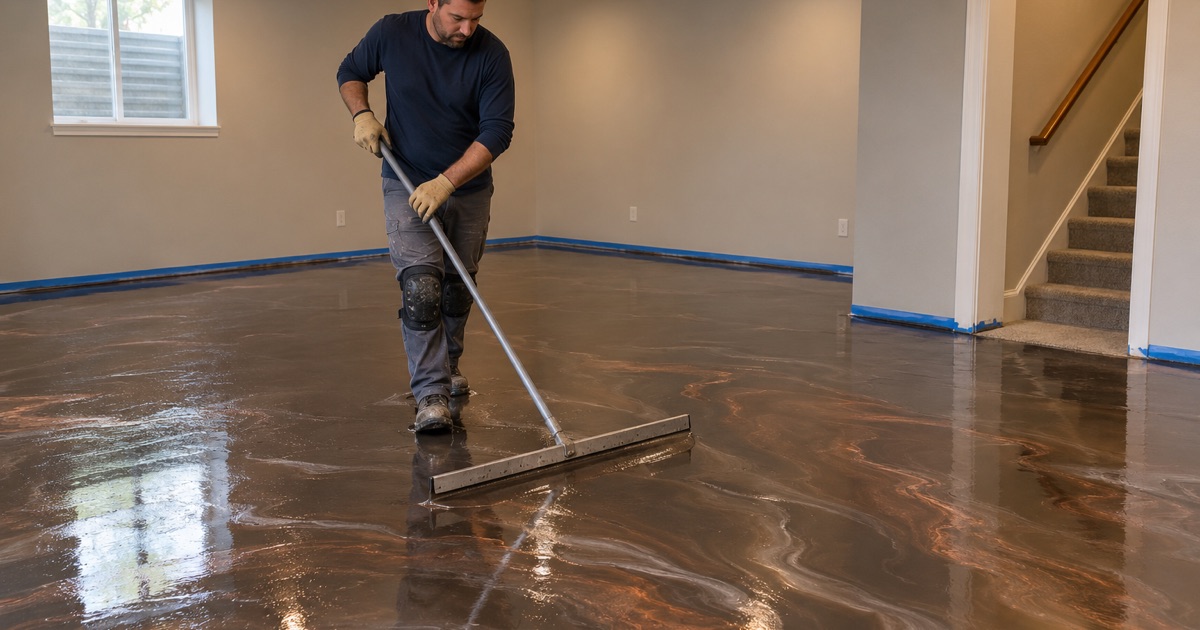
The metallic epoxy is mixed with its pigments and spread across the floor, then worked with rollers, trowels and brushes while it is still fluid. Techniques such as solvent misting, color blending and directional rolling create cells, veins or flowing waves. Timing matters, because the pattern has to be set before the resin starts to cure.
This is where an experienced crew earns its keep. The same products in different hands produce very different floors, and the layer cannot be redone once it gels.
Clear Topcoat
A clear topcoat protects the metallic layer from scratches, chemicals and sunlight. We usually specify a polyaspartic or polyurethane topcoat because most epoxies yellow under ultraviolet light. Sheen can range from high gloss to satin, and a fine anti-slip additive can be mixed in where traction matters.
Designing Your Metallic Floor
Color Combinations
Metallic floors often combine two or three colors, such as a charcoal base with silver and copper, or a white base with pearl and gray. Neutral palettes suit most homes and offices, while bolder combinations work in bars, salons and showrooms. We show samples in your actual lighting before you decide.
Movement and Pattern
Some clients want a calm, marble-like floor with subtle veins, while others want strong movement that looks like flowing lava or ocean water. We agree on the style and the level of contrast before the install. Large rooms can be planned with a direction of flow that leads toward doors or focal points.
Borders, Saw Cuts and Joints
Control joints in the slab can be honored as part of the design or filled and coated over, depending on the slab. Decorative saw cuts and borders can frame a room or divide colors. Planning these before the metallic layer avoids hard lines where they do not belong.
Residential Metallic Epoxy Floors
Finished Basements and Family Rooms
Metallic epoxy is a popular choice for finished basements because it brightens the space and works with area rugs and in-floor heat. Basement slabs need moisture testing first, using a plastic sheet test to ASTM D4263 and calcium chloride or relative humidity testing where warranted, because vapor from below is the leading cause of coating failure.
A thin coating also keeps basement headroom intact, which matters in New Berlin, where the recreation room handout measures the required 7-foot ceiling height from the basement floor. A raised subfloor would eat into that height, while a metallic coating adds almost nothing.
Kitchens, Bars and Living Areas
In kitchens, home bars and living areas, a metallic floor gives a seamless, easy-to-clean surface with real visual depth. It handles spills well, and a satin topcoat can reduce glare in bright rooms. We plan transitions to adjoining flooring so thresholds stay level.
Garages, With Caveats
A metallic garage floor can look striking, but Wisconsin winters bring rock salt, calcium chloride brine and hot tires that are hard on any smooth decorative coating. If you want metallic in a garage, we build it with a tough polyaspartic topcoat and explain the care it will need. For many garages, a flake floor is the more practical choice.
Commercial Metallic Epoxy Floors
Showrooms and Retail
Metallic floors give showrooms and retail spaces a high-end look that sets a brand apart. They are seamless, easy to clean and reflect light well. We schedule commercial installs around business hours, and each coat is planned so the space can reopen on a known date.
Offices, Salons and Studios
Offices, salons, fitness studios and restaurants use metallic floors where appearance matters and traffic is moderate. Chair casters and grit can scratch any glossy surface, so we recommend protective mats under rolling chairs and walk-off mats at entries. A satin finish also hides fine scratches better than high gloss.
Where Metallic Is Not the Right Choice
Floors with forklift traffic, heavy rolling loads, hot water washdown or harsh chemicals need an industrial system instead. In those spaces, we recommend a high-build epoxy, urethane cement or a quartz system, and we say so rather than install a decorative floor where it will not hold up.
Our Step-by-Step Metallic Epoxy Floor Process
Step 1: Slab Assessment and Design Meeting
We test for moisture, read the slab’s cracks and joints, and review colors and movement with samples. The proposal lists each product, coat and the finished thickness, and home jobs get a written contract before any deposit.
Step 2: Grinding, Repairs and Primer
The slab is ground with dust collected at the machine, repaired and primed. Grinding dust and slurry are bagged on site and never washed into a floor drain.
Step 3: Base Color and Metallic Layer
The tinted base coat goes down and cures, then the metallic layer is placed and worked by hand. We monitor slab temperature and the dew point spread throughout so the resin cures as it should.
Step 4: Topcoat and Handover
The clear topcoat is applied at the specified thickness, and we confirm in writing when the floor can take foot traffic and furniture, with care instructions to keep it looking new.
Before we leave, we walk the floor with you under the room’s own lighting. Warranty terms are reviewed again at that point, including the exclusions we read out before the job was sold, with moisture from below listed first.
Caring for a Metallic Floor
Daily and Weekly Cleaning
Grit is the main enemy of any glossy floor, so dust-mop or vacuum with a soft head regularly and damp-mop with a pH-neutral cleaner. Avoid citrus and vinegar cleaners, harsh solvents and abrasive pads, which dull the topcoat. Wipe up spills promptly, especially in kitchens and bars.
Protecting the Topcoat
Felt pads under furniture legs, chair mats under rolling chairs and walk-off mats at entry doors do more to protect a metallic floor than any cleaner. In basements, put a mat under exercise equipment. These small steps keep fine scratches from building up across the main traffic paths.
Refreshing the Finish
After years of use, a worn topcoat can be lightly abraded and recoated without disturbing the metallic layer beneath it. Planning that refresh before the topcoat wears through keeps the original pattern intact, and we can advise on timing during a visit.
- 20+ Years on Concrete
- Moisture Testing in Every Scope
- Written Contract Before Any Deposit