New Berlin Epoxy Flooring brings 20+ years of shop and plant work to epoxy flooring in Menomonee Valley, and an iron foundry is the one building where we start by drawing a line across the floor plan. On one side sits the melt and pour floor, which stays bare, dry and covered in sand. On the other side sit the rooms where no metal is poured, and those are the rooms a resin floor can actually serve.
That line matters more than any product choice. Water trapped under molten metal does not stay water, and a sealed finish that holds rinse water or mop residue is the wrong surface anywhere metal might spill. Our work in a foundry is the core room, pattern storage, machining bays, inspection and offices, plus a clear written plan for exactly where the coating stops.
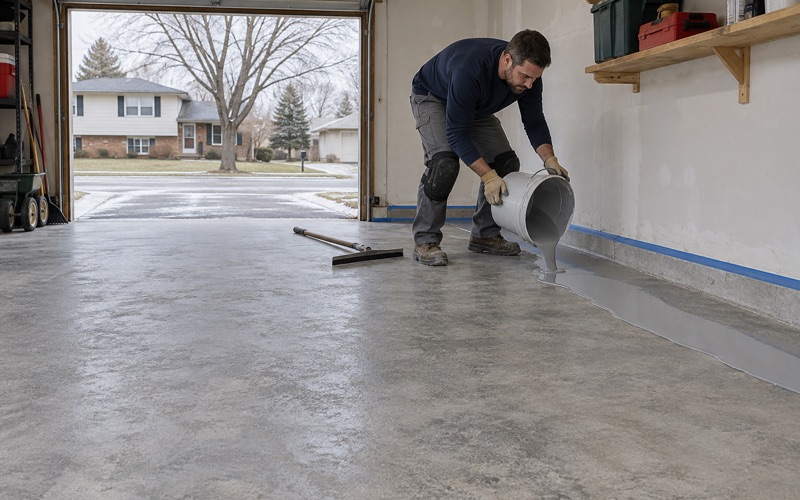
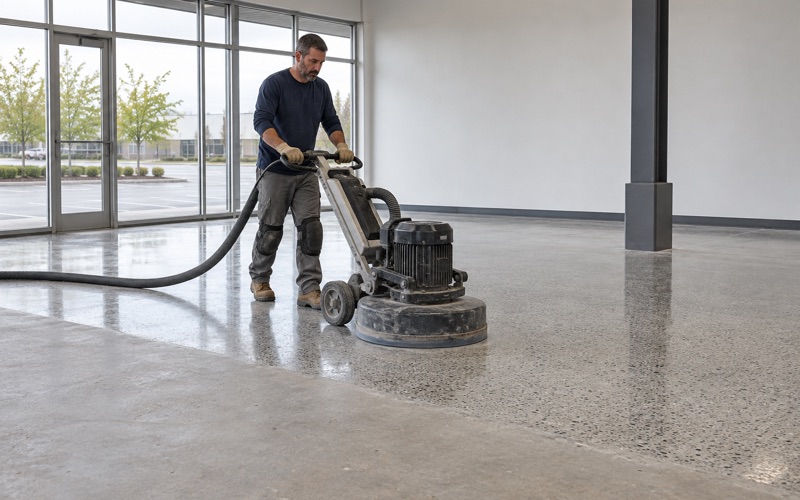
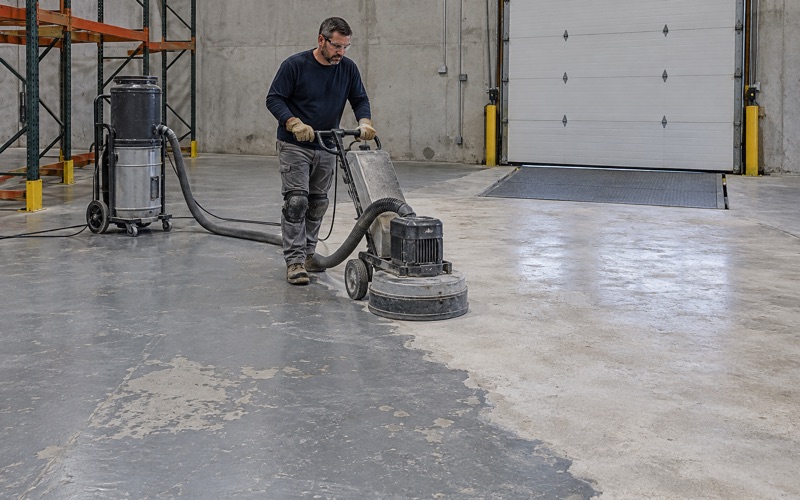
Every slab we take on is opened with a diamond grinder or shot blaster before anything goes down, and we never acid etch, which would add water and residue to a floor we are trying to keep dry. Our proposal names the product, the system build and the finished thickness, so a plant engineer can check the quote against what was actually installed.
An Iron Foundry on Bruce Street, and Why Water Is the Hazard
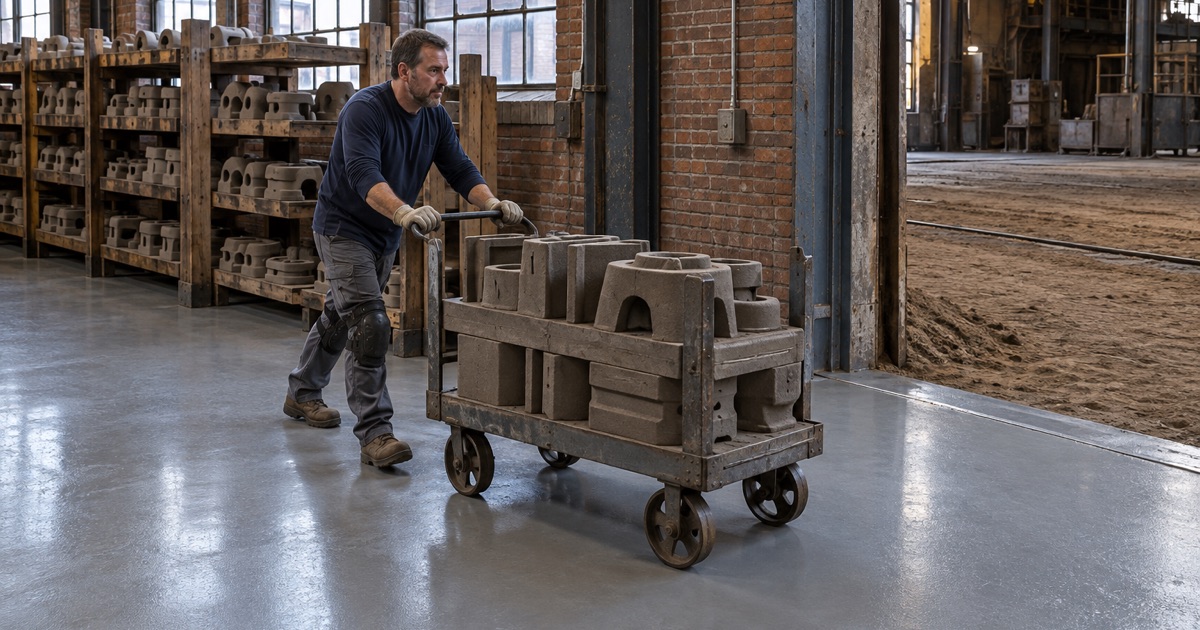
Mid-City Foundry has poured iron at 1521 West Bruce Street since 1941, a family-owned shop listed in the Menomonee Valley Partners directory of Valley companies. The plant makes jobbing and semi-production gray, ductile and alloyed iron castings, melts on decks equipped with induction melting, and turns out castings up to 1,500 pounds at its Milwaukee plant.
That is the kind of operation the Menomonee Valley was built around. The U-shaped bend of the Menomonee River gave Milwaukee easy water access to Lake Michigan, and the Valley became home to the city’s stockyards, rendering plants, shipping and heavy industry. A foundry still pouring iron there sets the terms for any floor work we would propose nearby.
Water Under Molten Metal Turns to Steam
Foundry trade guidance is blunt about the mechanism. Water, moisture or any liquid-bearing material that contacts molten metal turns instantly to steam, expanding to 1,600 times its original volume, and the expansion is violent enough to throw metal. A small puddle trapped beneath a spill is not a cleanup problem at that point; it is the start of an explosion.
OSHA documented exactly that in a January 2023 release about two Ohio incidents. In one, at a plant in Waterford, water combined with tons of superheated material spilling onto a foundry floor caused a steam explosion that severely injured a supervisor. We cite it because it shows the hazard in a real plant, not because anything like it has happened in the Valley.
What That Means for a Floor Finish
A floor coating is designed to be easy to wash, and a smooth sealed surface holds a film of rinse water or wet-mop residue on top rather than letting it drain or soak away. In a pour aisle, that is the opposite of what the room needs. No published rule bans coatings in a foundry, but the practice of keeping molten metal away from moisture points the same direction.
So the boundary we draw is trade judgment built from those sources, and we say so on the proposal. It is our reading of foundry practice, not a code citation, and the plant’s own safety staff have the final word on where metal may travel. Our job is to keep the resin floor on the side of the line where metal does not.
Looking for epoxy-flooring closer to Bay View? See Epoxy-Flooring Services in Bay View.
Pour Aisles, Furnace Pits and Dry Sand
In any iron foundry, the melt and pour floor runs on dryness first. Furnaces, ladles and molds sit in a zone where a spill is always possible, and the floor’s job is to give a spill nowhere wet to land. That is a different job from the one an epoxy system does, and we would rather say so than quote a floor that does not belong there.
The Furnace Pit Stays Clean and Dry
Foundry Management and Technology put the rule simply in 2009: keep the furnace pit area clean and dry, and do not allow water or hydraulic fluid to accumulate in the pit. The pit is designed to hold molten metal in an emergency, so anything left standing in it is waiting for the worst possible moment. We do not coat a furnace pit, and we would not propose to.
Dry Sand Over the Pour Area
A university foundry-safety handout advises a dry sand bed at least 3 inches thick under all pouring work areas, both to contain spills and to protect the flooring. It also warns never to pour over wet ground, because even trace moisture can cause an explosion. A sand bed absorbs and spreads a spill in a way a glossy resin surface never will.
The same handout says molten metal spilled on concrete can make the concrete burst. Experienced metalworkers dispute that as an absolute, and we treat it as a precaution rather than a certainty. The practical point holds either way: a pour area wants dry sand between metal and slab, not a sealed coating holding last night’s mop water.
Dry Cleaning Near Melt and Pour
The cleaning plan matters as much as the floor plan. Near melt and pour, floors are swept, vacuumed or cleaned by other dry methods, and wet-mopping stays out of those zones. When we coat an adjacent room, we write the maintenance instructions so the crew that washes the core room floor knows exactly where the wash water has to stop.
We also plan the transition itself. A coated room that opens onto the pour floor needs a clear edge, a threshold detail that keeps rinse water from running toward the melt, and a cleaning routine that never carries a wet mop across the line. A floor boundary on a drawing is only as good as the daily habits that respect it.
Resin in the Rooms Where No Metal Is Poured
Most of a foundry’s square footage is not the pour floor. Core making, pattern storage, machining, heat treat support, inspection and offices all sit in rooms where no metal is poured, and those floors take forklift traffic, sand, oil and cleaning every shift. That is where a properly prepared resin system earns its place.
Core Room Floors
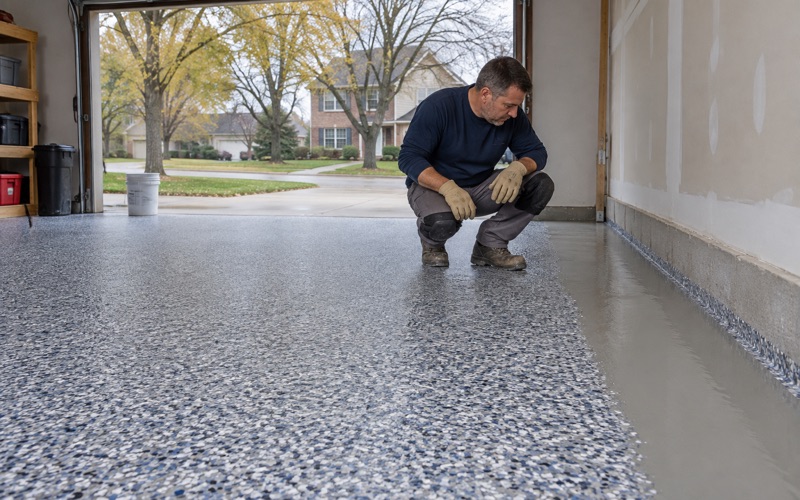
A core room handles sand and binders for phenolic, shell, furan and oil-sand cores, the core types a shop like Mid-City lists among its methods. Sand tracked underfoot grinds at a finish, and resin binders drip. We usually propose 100% solids epoxy with a quartz aggregate broadcast for traction, topped with a polyaspartic or urethane coat that stands up to hard scrubbing.
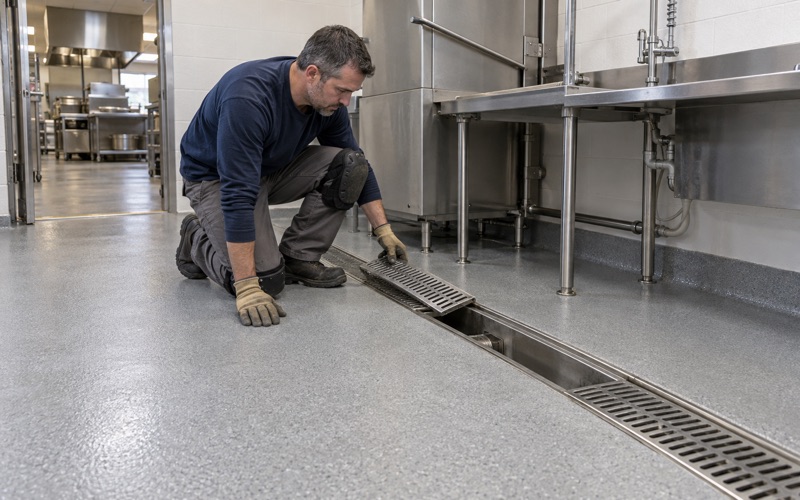
A core room floor also needs to be cleanable without becoming a water source. We set the texture so a wet-vac or auto-scrubber picks the water up fully, and we keep the coated area well back from any door that leads to the melt deck. The aim is a floor that can be washed safely because the water has somewhere controlled to go.
Pattern Storage and Machining Bays
Pattern storage is mostly racking and forklift lanes, and the failure point is almost always the joints. We fill plant joints with a semirigid filler before any coating goes over them, so forklift and cart wheels do not break the edges. Machining bays add coolant and cutting oil, which call for a chemical-resistant topcoat and a profile that grips when the floor is slick.
Before any of that, we read the cracks, joints and old coatings in each room. A slab in an older Valley building may carry spalls, settled sections or failing paint, and we say plainly when a section needs repair or replacement before it can be coated. Coating over a broken slab only hides the problem until the first heavy load rolls across it.
Inspection Rooms and Offices
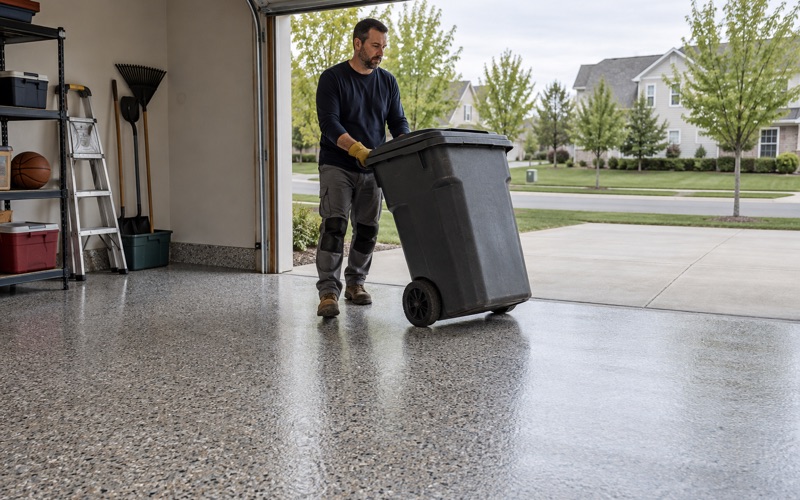
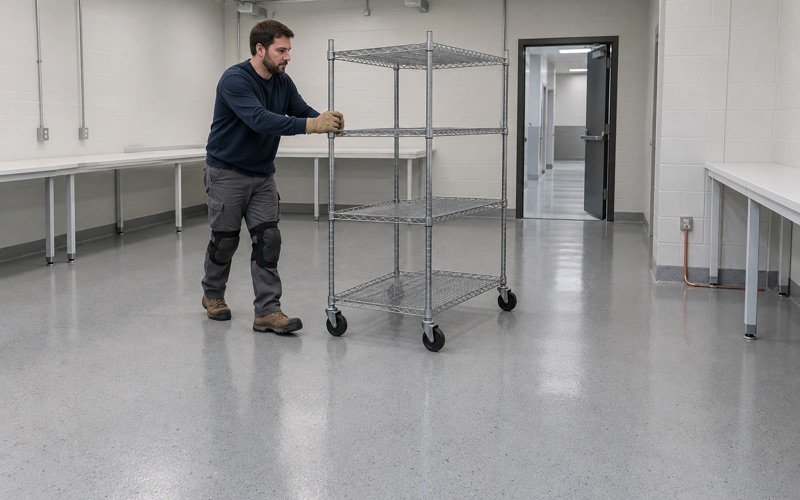
Inspection areas want a bright, flat, easy-to-read floor where castings are set down, measured and moved, and a light-colored epoxy with a fine broadcast does that well. Offices and break rooms near the plant take a lighter build, often a vinyl flake system, that resists the sand and grit tracked in from the shop floor all day.
Where an inspection room sits beside a cleaning room or shakeout area, we treat the doorway as part of the boundary. Sand and fines drift across a threshold every shift, and a coated floor that meets them needs a broadcast heavy enough to hold traction and a topcoat hard enough to shrug off grit without dulling in a month.
Planning Floor Work Around a Working Foundry
A foundry rarely stops, and floor work has to fit around production. We schedule industrial floors around shift breaks, weekends and shutdown weeks, and we sequence rooms so the plant keeps a path for material from core room to molding line. Curing is timed against slab temperature and the dew point spread at the surface rather than the calendar.
Moisture Testing Before the Coating
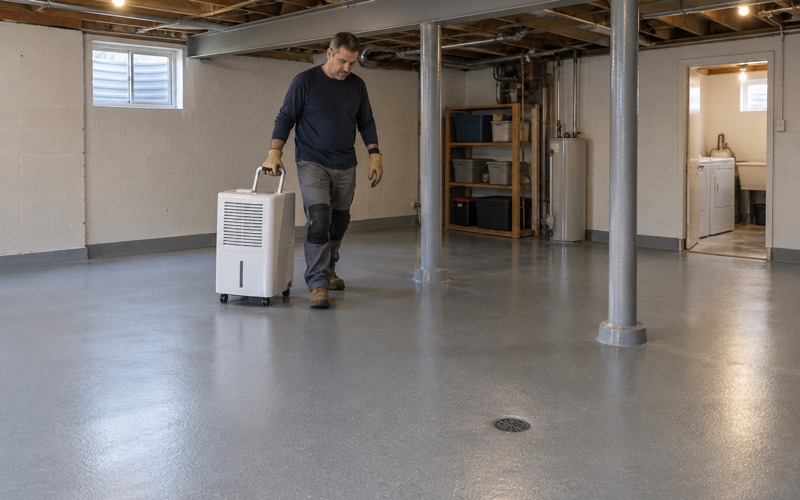
Moisture under a coating is the other half of this story. We test slabs before coating them, using ASTM F2170 in-situ relative humidity probes or ASTM F1869 calcium chloride testing where each fits, because a slab that looks dry may not be. Vapor pushing up under a resin floor causes blisters and outgassing, and no topcoat fixes that from above.
We also read warranty exclusions out before the job is sold, and moisture from below is the first one we name. If a room tests high, a moisture-mitigation primer goes into the scope before the coating, not after a failure. Telling a plant manager that up front is cheaper than an argument over a blistered floor six months later.
Dust, Slurry and Permits
Grinding dust and slurry are collected on site and never washed into a floor drain or a storm sewer, which matters in a Valley that was once a primary source of pollution for the river. In a foundry, collecting dust dry also keeps grinding slurry from ending up anywhere near the melt deck.
Menomonee Valley is an industrial district inside the City of Milwaukee, so permits and inspections run through the City of Milwaukee Department of Neighborhood Services, with commercial plan review under the Wisconsin Commercial Building Code. We ask before scheduling whether a given job needs a permit, rather than assuming a coating never does.
A Proposal You Can Check
Each proposal lists the product, the system build and the finished thickness room by room, along with the line where the coating stops and the reason it stops there. A plant engineer can walk the floor after install and compare what went down with what was quoted. For a foundry, that drawing of the boundary is as important as the resin itself.
- 20+ Years on Concrete
- Moisture Testing in Every Scope
- Written Contract Before Any Deposit