New Berlin Epoxy Flooring brings more than 20 years of slab preparation and resin work to epoxy flooring in Hartland, and some of the floors we think hardest about here are ones that are meant to be painted over. A resinous system is not the right answer for every square foot of a building. Our job is to say which rooms want one and which rooms want a surface a crew can repaint next month.
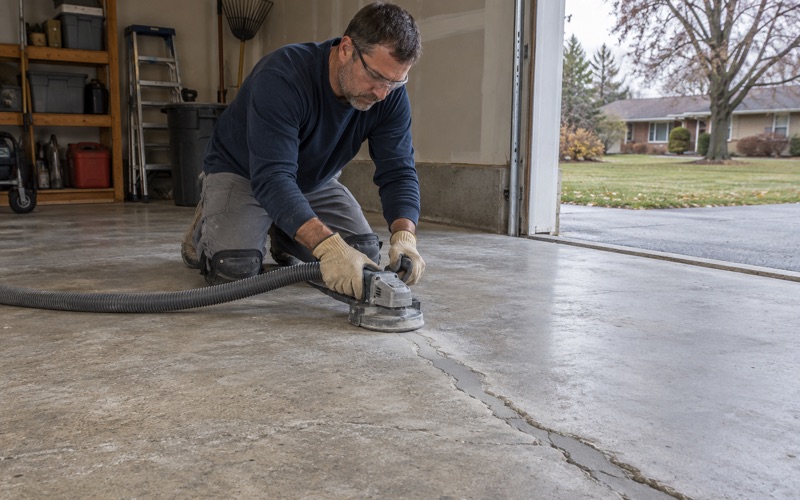
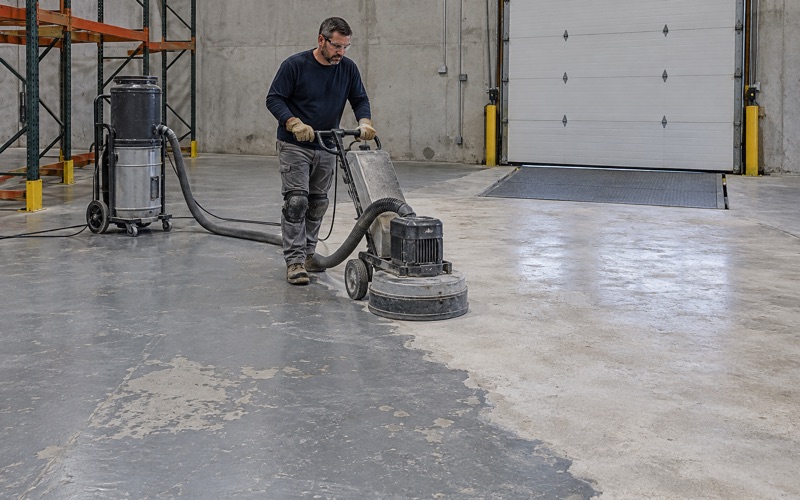
Every slab we coat is opened mechanically first, with a diamond grinder or a shot blaster, to an ICRI CSP profile that suits the system going down. We never acid etch. Before a number goes on paper we read the cracks, the joints and any old coating, and if a slab needs repair or replacement before it can carry a coating, we say so in plain words.
The proposal you receive names the product, the system build and the finished thickness, so what we quoted can be checked against what went down on the floor. Warranty exclusions are read aloud before anything is sold, and moisture rising from below is the first exclusion we name. Home jobs get a written contract, with products and any warranty spelled out, before we take a deposit.
A Black Box Theater in a Converted Masonic Lodge
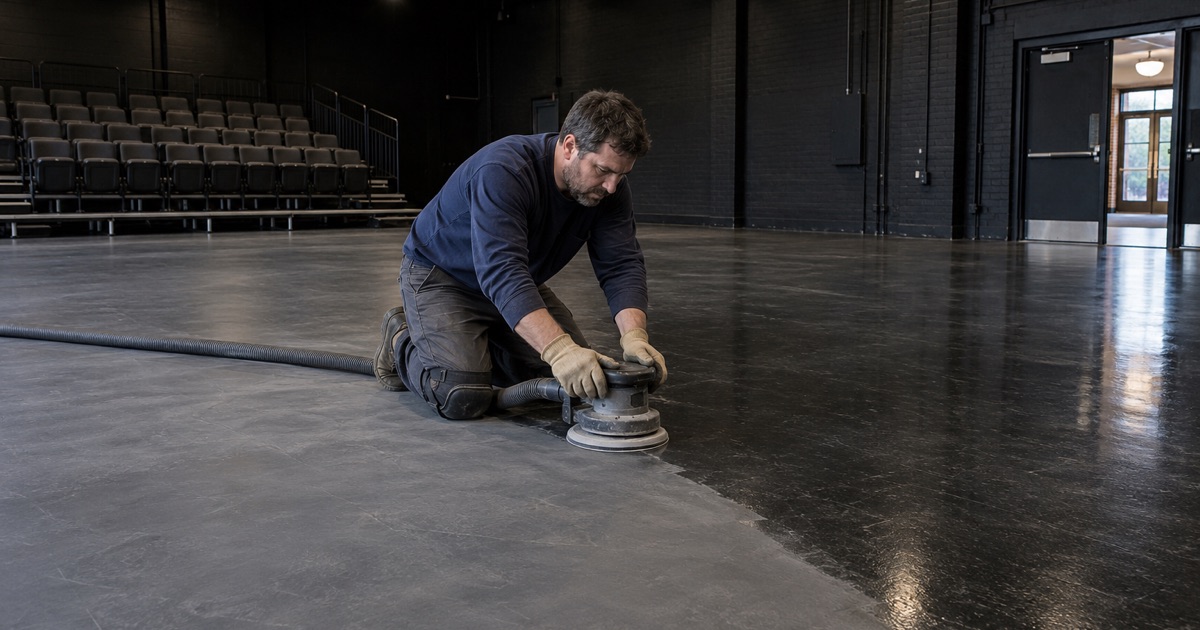
Lake Country Playhouse at 221 E. Capitol Drive is a useful way to think through floors in Hartland, because one building holds nearly every kind of surface a performing company leans on. We have no part in its floors and do not know what finish its new work will carry. It is simply the clearest local example of how a stage floor and a shop floor ask for different things.
An 82-Seat Room With Its Own Shops
The company describes its home as a cleverly converted Masonic Lodge housing an 82-seat black box theater along with scenic, paint and costume shops. That mix matters to anyone planning floors. The performance room, the rooms where sets are built and painted, and the room where costumes are cut and fitted each take a different kind of traffic, a different kind of spill and a different kind of upkeep.
When the Floor Is the Stage
A black box has no raised proscenium stage. The audience and the performers share one flat room, and the floor itself becomes the playing surface for every show. Actors kneel and roll on it, and the set design often extends right across it. That is why companies working in these rooms treat the floor as scenery rather than as finished architecture, and why its upkeep looks nothing like a garage or a warehouse.
In practice, black box floors are repainted in scenic paint for production after production, usually back to a neutral black between designs. Theater technicians describe repainting between shows or once a year. They also warn that once a coat fails to bond, nothing put on top of it bonds either, which is why a bonding primer before the next repaint is a common recommendation among people who do this work.
The Addition on East Capitol Drive
In July 2025, BizTimes reported plans for a roughly 2,100-square-foot single-story addition housing a new black box for 105 more patrons, bringing capacity to just over 200. The report mentions new flooring, a new accessible entryway and a new staircase, with VJS Construction Services of Pewaukee leading, and VJS lists the project as under construction. What finish that new floor receives has not been published.
Looking for epoxy-flooring closer to Oak Creek? See Epoxy-Flooring in Oak Creek.
Repainting the Stage: What Rosco Says About Glossy Surfaces
Any stage that gets repainted is only as good as the bond between the new coat and the surface under it. That bond is where a resinous floor and scenic paint either work together or fight. The guidance theater crews already follow comes from the paint side, not the flooring side, and it is worth reading closely before anyone puts a glossy coating under a performance space.
Tough Prime and an Eggshell Black
Rosco markets Tough Prime Black as perfect for stage floors and proscenium arches. It is a water-based acrylic primer with an eggshell finish in black, sold to resist scuffs and abrasions, and Rosco lists it as compatible with its own Scenic Paints and most other paints. Rosco’s page does not rate any floor coating, and nothing we say here suggests it endorses one.
For a theater, that product describes the target: a low-sheen black surface that takes the next layer of scenic paint and can be refreshed by the company’s own crew. Whatever sits underneath it, whether sealed concrete, hardboard or a resinous coating, has to accept that primer reliably every time the show changes. That requirement drives the choice of floor beneath it far more than appearance does.
Scuff-Sand, Then Remove All the Dust
Rosco’s instructions are specific. When painting over solvent-based finishes or high-gloss surfaces, roughen them first with fine sandpaper or steel wool to give the surface more tooth, then remove all of the sanding dust for best adhesion. A cured epoxy or polyaspartic topcoat in a gloss sheen is exactly the kind of high-gloss surface that instruction describes, so the rule applies to it in full.
If a black box or rehearsal floor is ever given a resinous coating, each repaint begins with a scuff-sand and a thorough dust pickup, not a roller straight out of the bucket. Skipping that step is how the first failed coat happens, and the warning about nothing bonding over a failed coat follows from it. A coated performance floor adds a preparation step to every changeover; it does not remove one.
A Topcoat Chosen to Take Paint
When we are asked to coat a floor that will be painted over, we choose the system for adhesion and durability rather than shine. A satin or low-gloss topcoat, a texture that holds a scuff pattern evenly, and a build that tolerates repeated light sanding without wearing through are the priorities. No resin we install removes the need to sand before scenic paint; the point is that the sanding goes predictably.
We also tell a company plainly when a coating is not worth it. A performance floor that is already sound and already takes paint well may be better left as it is, with resin spent on the rooms around it. That conversation happens before a proposal is written, because a floor that fights the crew every production is a bad floor however good it looked on day one.
Where Resin Belongs: Scene, Paint and Costume Shops
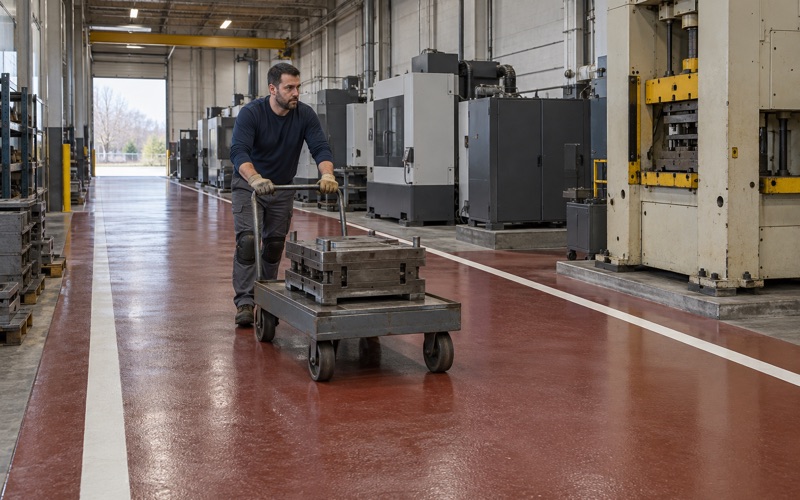
The rooms nobody repaints are where a resinous system does its real work. In a theater, those are the scene shop, the paint shop, the costume shop and the back-of-house corridors that connect them. They take rolling loads, dropped tools, solvent and water spills and constant foot traffic, and none of them is meant to change color between shows.
Scene and Paint Shop Floors
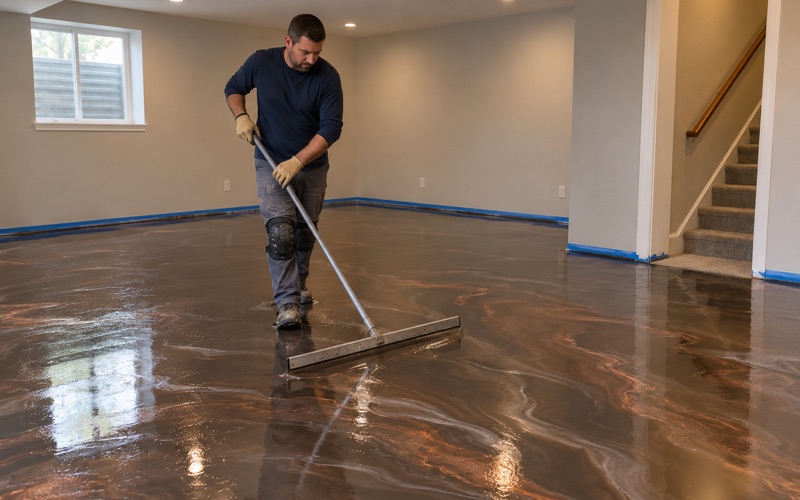
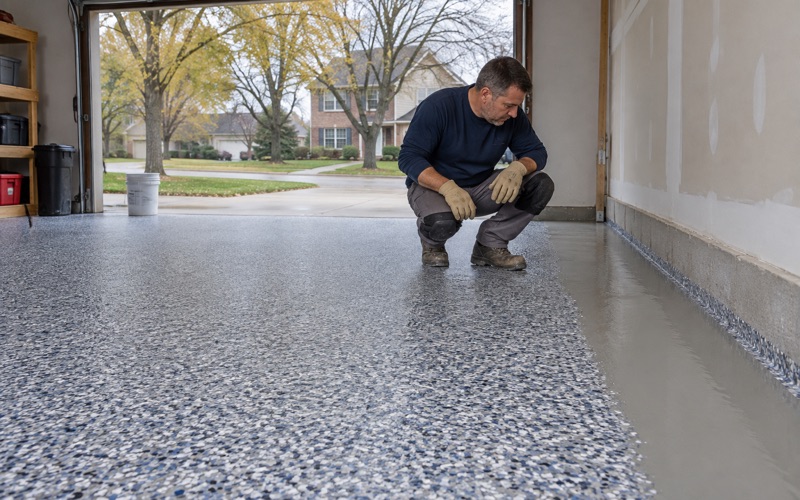
Scenic and paint shops are where spills land. Buckets tip, brushes get washed, and paint dries on the floor in layers if the surface lets it. A 100% solids epoxy base with a quartz aggregate broadcast gives texture underfoot where water and paint are common, and a urethane cement system can make sense where hot water and harsher cleaning are part of the routine.
Shop slabs usually carry saw cuts and control joints, and those edges break down under cart and lift wheels. We fill joints with a semirigid filler before coating over them so wheels roll across without chipping the edge. Grinding dust and slurry from our preparation are collected on site and never washed into a floor drain or a storm sewer, which matters in a building with a working sink room.
Costume Shop and Back-of-House Corridors
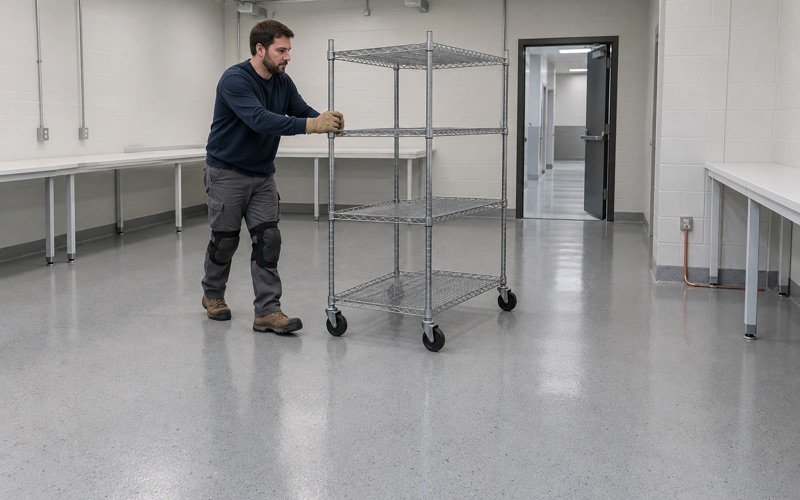
A costume shop is a quieter room, but it sees rolling racks, fabric dragged across the floor, and dye or steam work that leaves moisture behind. A smooth, cleanable resinous surface lets a crew sweep up pins and thread quickly. In back-of-house corridors, where sets and racks move during changeovers, a durable topcoat with a modest texture handles scuffing without needing a new finish each season.
Corridors and shops in an older building can also hold surprises under existing finishes. Before quoting, we look at what is already there, whether that is old paint, tile or a previous coating, and we name it in the scope. A slab that cannot carry a coating safely gets a repair plan or an honest recommendation to replace it, written down before any work is scheduled.
Rehearsal and Studio Floors
Rehearsal rooms and studios sit between the two worlds. Some are taped and painted like a stage, and some are simply hard-working rooms for classes and blocking. Where a studio floor must take paint or tape marks, we treat it like a performance floor and plan the scuff-sand into its upkeep; where it never will, a durable low-sheen resinous finish is a straightforward choice.
Hartland Theater, Studio and Shop Floor Questions
Most of the questions we hear about these floors come down to who approves the work, whether the slab is dry enough, and when the coating can cure. The answers depend on the building, so we put them in writing for each job rather than promising a schedule from the curb. A short visit with a moisture meter and a look at the joints usually settles more than a phone call can.
Who Signs Off on the Work
In the village, building, erosion control and land disturbance permits run through the Village of Hartland Department of Building Inspection at 210 Cottonwood Avenue, and zoning sits in Chapter 46 of the Village Code. Whether a floor coating needs a permit depends on the scope, so we ask the department before we schedule, especially when the coating is part of a larger addition or renovation.
Is the Slab Dry Enough?
We write moisture testing into every scope rather than selling it after a floor blisters. Depending on the slab, that means an ASTM D4263 plastic sheet test as a first look, ASTM F1869 calcium chloride emission testing, or ASTM F2170 in-situ relative humidity probes compared against the thresholds in ASTM F710. A coating is not a fix for water coming up through a slab, and we do not sell one as that.
Where readings run high, a moisture-mitigation primer may be the right first coat, and the proposal says so with its product name. Where they are too high for any system we install, we say that instead. Older converted buildings can hide efflorescence or damp corners under existing finishes, so we test more than one spot and record each reading in the scope.
When the Coating Can Cure
Curing is scheduled by slab temperature and the dew point spread at the slab surface, not by the calendar. Resin laid on a slab too close to dew point can blush or fail to bond, and amine blush on an epoxy coat has to be cleaned off before the next layer. For a theater, that means we plan floor work around the company’s dark weeks and confirm conditions on the morning we start.
- 20+ Years on Concrete
- Moisture Testing in Every Scope
- Written Contract Before Any Deposit