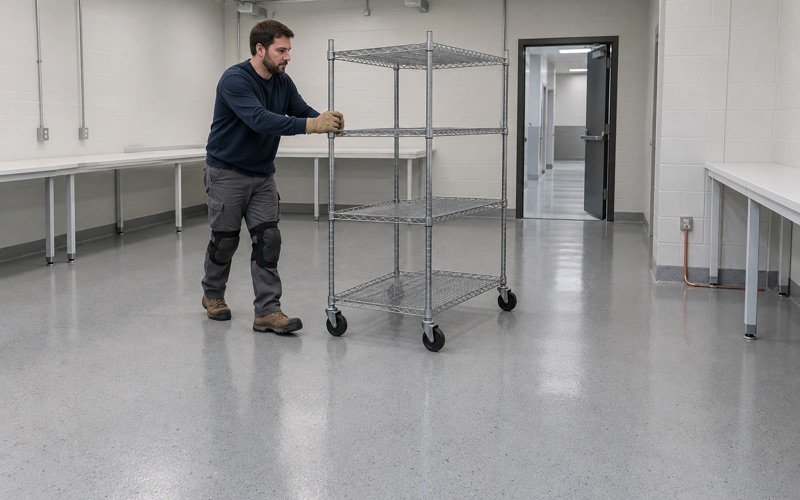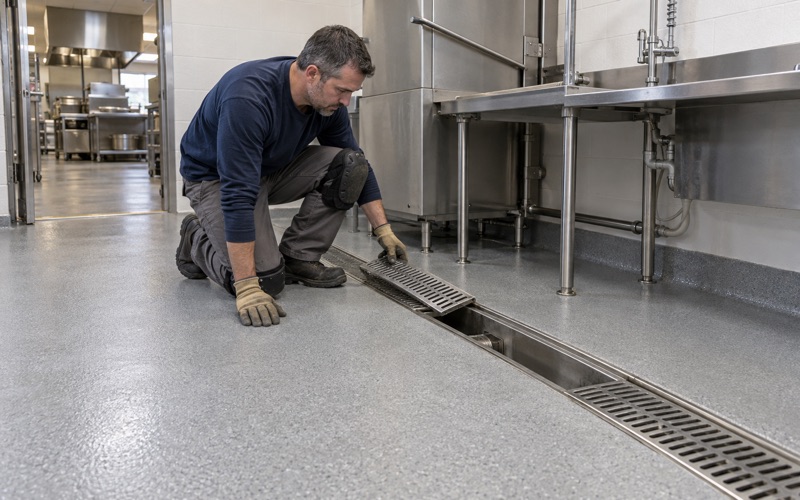
New Berlin Epoxy Flooring brings more than 20 years of concrete coating work to epoxy flooring in Hales Corners, and much of what we are asked here comes down to a plain question: is this slab finished, or is it bare? In a house that is a matter of looks and easy cleaning. In a building where older residents live under a federal housing program, the answer is written into an inspection standard.
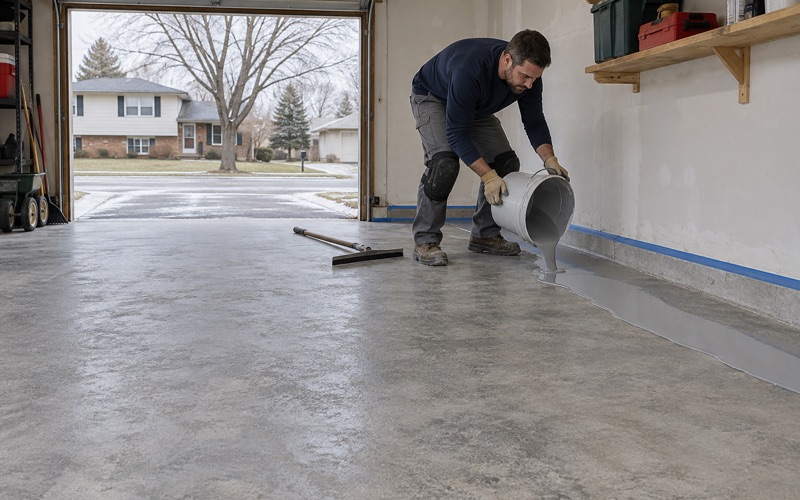
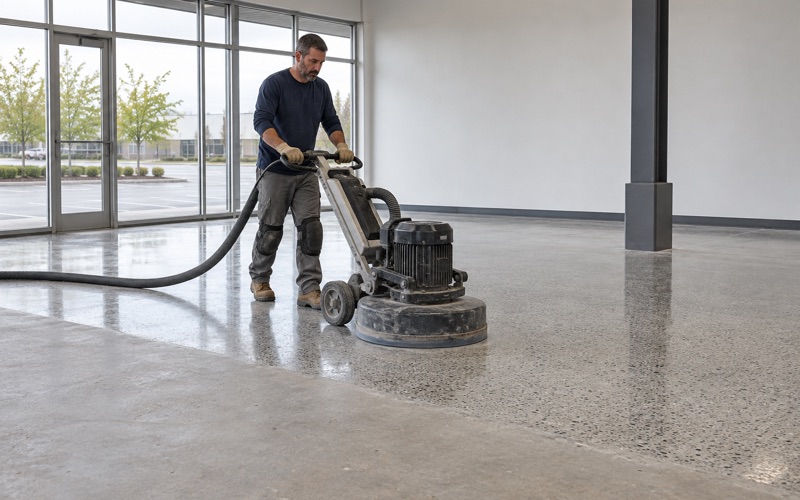
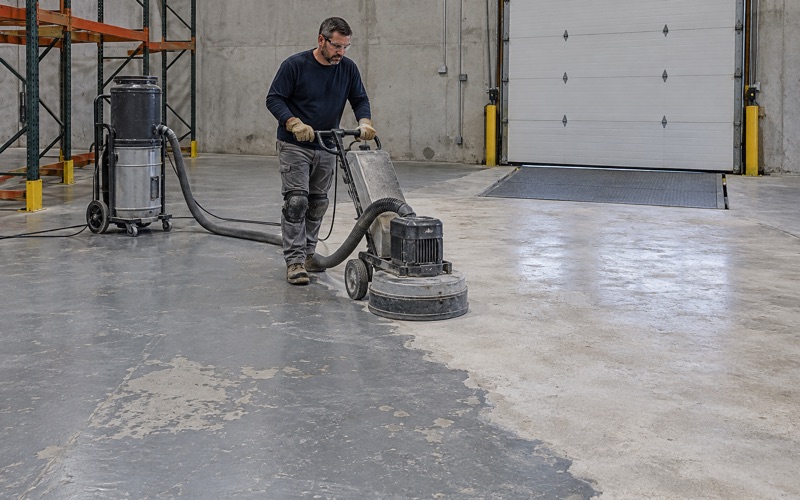
We treat both kinds of floor the same way at the start. The slab is opened mechanically with a diamond grinder or a shot blaster, never acid etched, and moisture testing is part of the written scope rather than an upsell after a blister appears. If cracks, joints or an old coating say the concrete needs repair first, we tell you before you sign anything.
This page covers the floors we see most often in the village: concrete in senior apartment common spaces, basements in postwar houses, and attached garages that carry winter brine in on every tire. It also explains how HUD’s floor rule shapes a coating decision, and what a worn finish means once an inspector starts measuring.
HUD Senior Housing on Forest Home Avenue
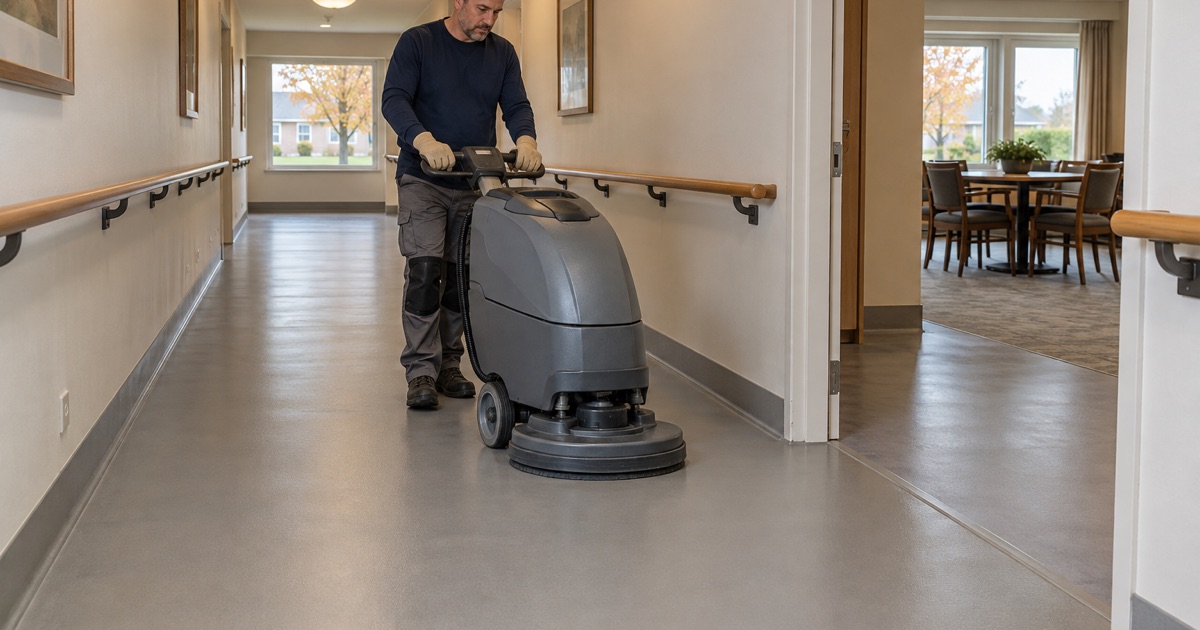
Hales Corners is a village of 7,720 people at the 2020 census, a Milwaukee suburb in Milwaukee County. Along West Forest Home Avenue it holds federally assisted apartments for older adults, and that housing is inspected under a national physical standard that has very specific language about concrete. That standard is the reason a community room floor here is not simply a design choice.
Forest Acres and the residents it serves
Forest Acres, at 10010 W. Forest Home Ave., is listed in housing directories as HUD Section 202 housing for residents 62 and older, with about 55 units. Rent is typically set at 30 percent of adjusted income. Section 202 properties are HUD-assisted, which places them under HUD’s NSPIRE inspection protocol, the standard that now governs how inspectors look at units and the shared spaces residents use every day.
We have no information about the floors at Forest Acres and make no claim about them. We mention the property because it shows what kind of building in Hales Corners lives under these rules. Any owner or manager of assisted senior housing in the village faces the same floor language, and it is worth knowing before a coating is chosen or a worn one is left alone.
What NSPIRE looks at on a floor
The NSPIRE Floor standard, version 3.0, published in August 2023, applies inside units and in inside locations such as dining, living, kitchen, bath, closet, hallway and other common spaces. It names two deficiencies. One is exposed floor substrate. The other is a floor component that no longer works as a floor, meaning it cannot separate levels or be walked on safely.
Surface problems alone, such as lifting tiles, cupping or bubbling, are not the second deficiency. That distinction matters for coated concrete.
A coating that has peeled back to raw concrete is a substrate question, measured by area. A coating that is merely dull or scuffed is a maintenance question. We help owners tell those two apart before an inspection does it for them.
Where an unfinished floor is still allowed
The standard does not ask for every slab in a building to be coated. Within an unfinished basement, bare concrete is acceptable. Unfinished floors are also acceptable in a garage, storage room, maintenance room, utility room or any other room not intended for resident access. Those spaces can stay as they are, which keeps a project’s scope and cost tied to the rooms that actually count.
Looking for epoxy-flooring closer to West Allis? See Epoxy-Flooring Services in West Allis.
Painted or Polished Concrete Passes, Bare Concrete Fails
The sentence that settles most of our conversations with senior housing managers is short. Within a unit or an inside location regularly used by residents, polished or painted concrete floors are acceptable, but bare concrete floors are not acceptable there. A laundry room, corridor or community room on a concrete slab therefore needs a finish, and the finish has to stay intact.
Choosing between a coating and a polished slab
NSPIRE accepts either painted or polished concrete. It does not require epoxy, and we will not tell anyone that only epoxy passes. A ground and polished slab treated with a lithium silicate densifier is one route. A 100% solids epoxy with a polyaspartic topcoat is another, and it adds color, chemical resistance and a surface that is easy to mop in a shared laundry.
The right choice depends on traffic, cleaning routines and how long a room can be closed. A polished slab has no film to wear through, while a coating can be renewed with a fresh topcoat before it thins to concrete. Our proposal names the product, the system build and the finished thickness, so a manager can check what was installed against what was quoted.
Preparing the slab so the finish stays put
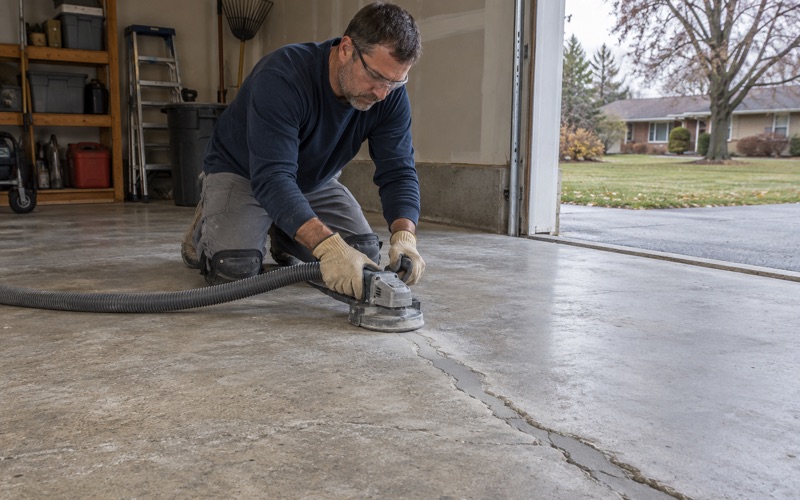
Most coating failures we are called to fix started with poor preparation. We grind or shot blast to an ICRI concrete surface profile matched to the system, then fill cracks and treat joints before the first coat. Acid etching leaves a weak, uneven surface and residue, which is why it never appears in our scope on any floor.
Old paint or a failing coating is assessed before we quote. Sometimes it grinds off cleanly. Sometimes the slab under it is damaged enough that repair has to come first, and we say so plainly rather than coating over a problem that will show through within a season.
Moisture testing before any coating goes down
Water vapor moving up through a slab is the most common reason a coating lets go, and it is the first exclusion we read out when we explain a warranty. We test with ASTM F2170 in-situ relative humidity probes or ASTM F1869 calcium chloride kits, and where readings are high we specify a moisture-mitigation primer rather than hoping the floor stays dry.
Ten Percent of a Room and a Thirty-Day Clock
The NSPIRE substrate deficiency is triggered when 10 percent or more of the floor substrate area is exposed in any room. The inspector measures the exposed area within each room, so a long hallway and a small laundry are judged separately. The finding is classed as Moderate, carries a 30-day correction timeframe, and is a fail for Housing Choice Voucher inspections.
How exposed substrate is measured
Because the area is measured room by room, a coating that wears unevenly can produce a deficiency in one space while the rest of the building looks fine. Traffic lanes at a community room door, the turn in front of a washer, and the strip where a cart is always parked tend to go first. A worn path that crosses a tenth of a small room adds up faster than most managers expect.
We walk these spaces with that measurement in mind. Rather than quoting a whole building, we can identify which rooms are close to the line, which are fine for now, and which need attention before the next inspection cycle. That gives an owner a plan that tracks the standard instead of a guess based on how a floor looks from the doorway.
Why a worn coating becomes a 30-day repair
Once a room crosses the threshold, the clock is short. Thirty days leaves room for testing, preparation, coating and cure, but not for a slow bidding process or a product chosen at the last minute. We keep systems and schedules ready for that kind of window, and we would rather see a manager before a citation than after one.
A well-built coating rarely gets that far. Renewing a topcoat while the base coat is still intact is cheaper and faster than rebuilding a floor from bare concrete. We recommend a walk-through of high-traffic common spaces every year or two, so recoating happens on the owner’s calendar rather than an inspector’s.
Planning work around the people who live there
In a building where residents are home all day, floor work is planned around shared spaces staying usable. A laundry or community room can often be closed for a short window while a corridor stays open, and fast-curing polyaspartic topcoats shorten the time a space is off limits. Grinding dust is collected on site with vacuum equipment, never washed into a floor drain.
Cure is scheduled against slab temperature and the dew point spread at the surface, not just the calendar. A coating applied on a slab too close to dew point can blush and lose adhesion, which would put the same room back on a repair list. We check conditions on the morning of the work and adjust rather than push ahead.
Hales Corners Homes, Basements and Garages
Most housing in the village is owner-occupied detached houses, and 35.4 percent of all units were built in the 1950s. Those homes bring their own concrete questions: older basement slabs, attached garages poured without a vapor retarder, and decades of salt. The same preparation and testing apply, just to a different set of risks.
Postwar basement slabs
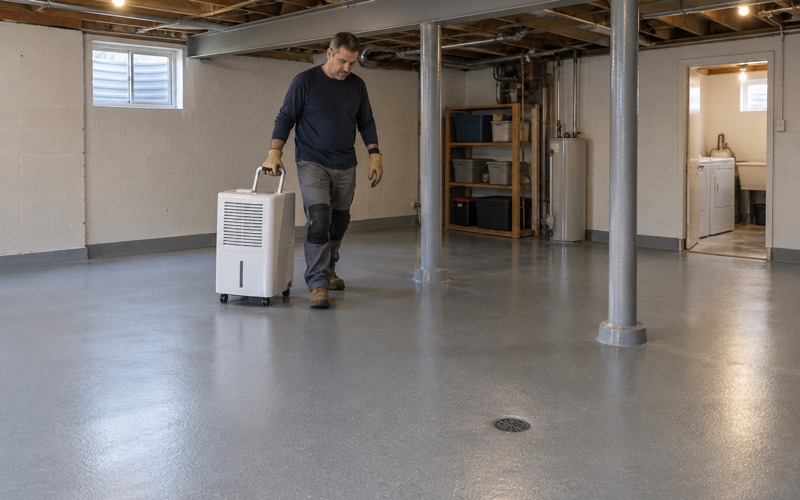
A basement slab from that era was usually poured without a vapor retarder under it, and many have seen periodic dampness or efflorescence. We run moisture tests before quoting a basement, and where hydrostatic pressure pushes water through the slab we say so. We do not sell a floor coating as a cure for water coming up from below, or as radon reduction.
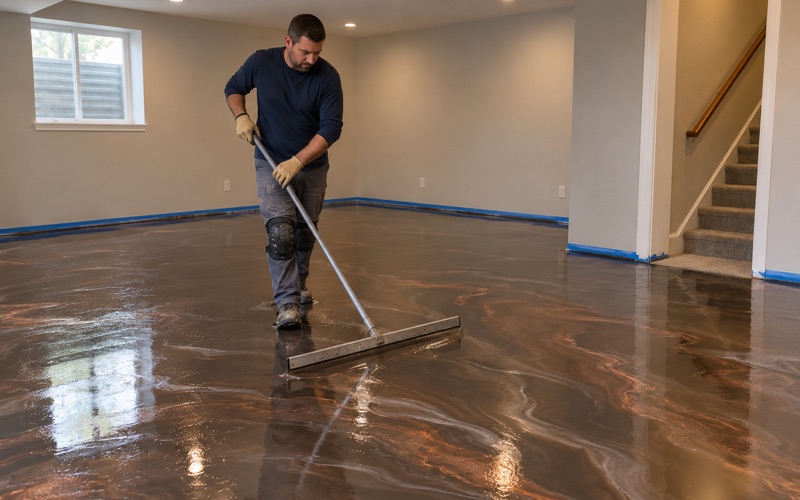
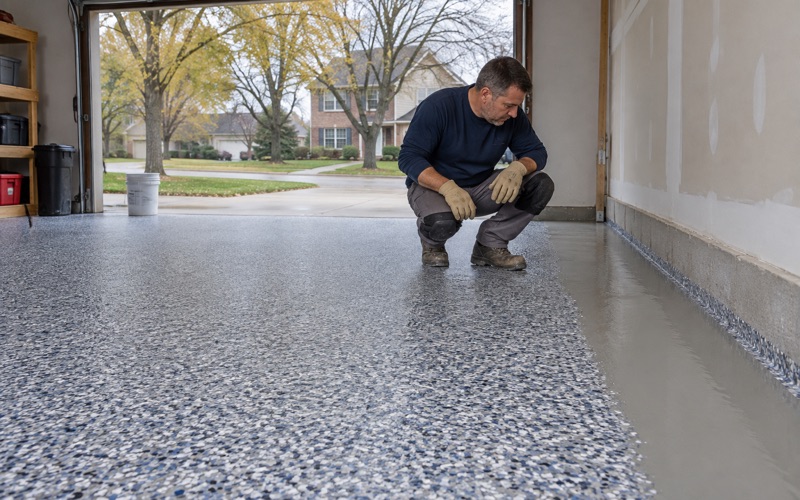
When readings allow it, a basement coating turns a utility space into a clean, bright floor for a workshop, laundry or recreation room. A broadcast of vinyl flake or quartz aggregate adds texture underfoot and hides the small imperfections an older slab always carries. We also check the existing joints and cracks so movement in the slab does not telegraph through the finish.
Attached garages and winter brine
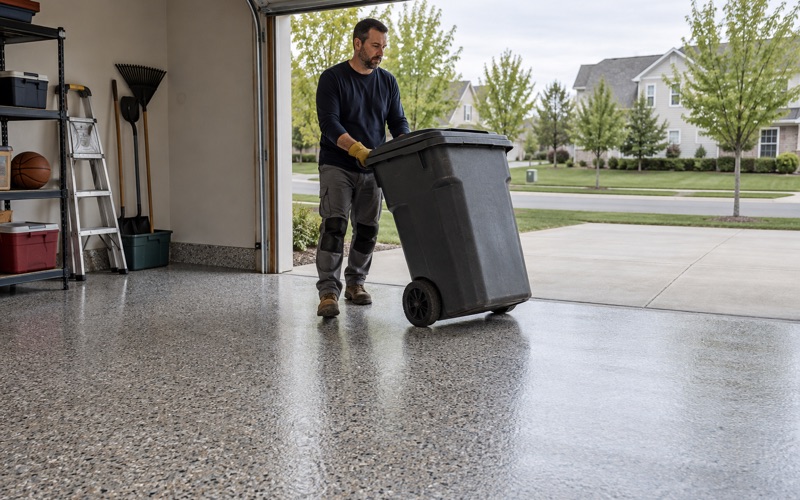
Wisconsin does not require a vapor retarder under an unconditioned attached garage slab, so a floor that looks dry may not be. We test before coating, then build garage systems to stand up to the road salt and calcium chloride brine that come in on tires all winter. A polyaspartic or polyurea topcoat resists hot tire pickup and cleans with a hose and squeegee.
An unheated garage cannot be coated in every month. When slab temperature is too low for a proper cure, we schedule the work for spring rather than rush it. That wait is written into the timeline from the start, so nobody is surprised when a November inquiry lands on an April date.
What we put in writing
Every home job gets a written contract before a deposit is taken, with the products and any warranty spelled out. Warranty exclusions are read aloud before the sale, moisture from below named first. Before scheduling, we ask the Village of Hales Corners Building Inspection office whether the job needs a permit, so a simple recoat and a project that moves plumbing are each handled the right way.
- 20+ Years on Concrete
- Moisture Testing in Every Scope
- Written Contract Before Any Deposit