
New Berlin Epoxy Flooring installs commercial epoxy flooring in New Berlin, WI, serving surrounding cities including Hales Corners, West Allis, Greenfield, Brookfield and Waukesha. Over more than 20 years we have coated storefronts, offices, dealership service drives, clinics, gyms, restrooms and back-of-house areas, and almost every one of those jobs had to be done around a business that wanted to stay open.
Commercial floors sit between the garage and the factory. They need to look good to customers, survive daily foot traffic and cleaning, handle the occasional pallet jack, and meet the expectations of building codes and inspectors. We start with the slab, test it for moisture, read its cracks and joints, and write a proposal that names the product, the system build and the finished thickness for every space.
Floors for Different Commercial Spaces
Retail and Storefronts
Retail floors take constant foot traffic, shopping carts and rolling displays, and they are the first thing customers see. A flake or quartz broadcast system with a clear polyaspartic topcoat hides scuffs, holds its color under storefront glass and cleans quickly at the end of the day. We add texture at the entrance, where snow and slush come in all winter.
Where a brand wants a cleaner, more polished look, a solid color or metallic system with a satin topcoat can work in lower-traffic areas. We help you place each system where it suits the traffic.
Offices, Lobbies and Common Areas
Office and lobby floors need to look professional and stand up to rolling chairs, carts and frequent cleaning. Seamless epoxy and polyaspartic floors avoid the grout lines and seams that collect dirt in tile, and they can be designed in company colors. Chair mats under rolling chairs protect any glossy finish from fine scratches.
Dealerships and Auto Service Shops
Service drives and repair bays see wet tires, road salt, calcium chloride brine, motor oil and constant turning. Those areas get a thicker, chemical-resistant system with texture for grip, while showrooms get a smoother, higher-gloss finish that flatters the vehicles. Hot tire pickup is a real concern in service lanes, so the system is built to its rated thickness and allowed to cure fully before cars return.
Clinics, Gyms and Restrooms
Clinics, veterinary offices, fitness studios and restrooms need floors that are seamless, easy to sanitize and safe when wet. We can run the coating up the wall as an integral coved base so there is no seam at the floor line for water and dirt to collect. Gyms get thicker systems or rubber matting where weights are dropped.
For food service areas, the floor is planned with the health department’s plan review in mind. In New Berlin that review is done by Waukesha County Environmental Health, and we build coved bases and slope to drains where the space requires them.
Back-of-House, Storage and Mechanical Rooms
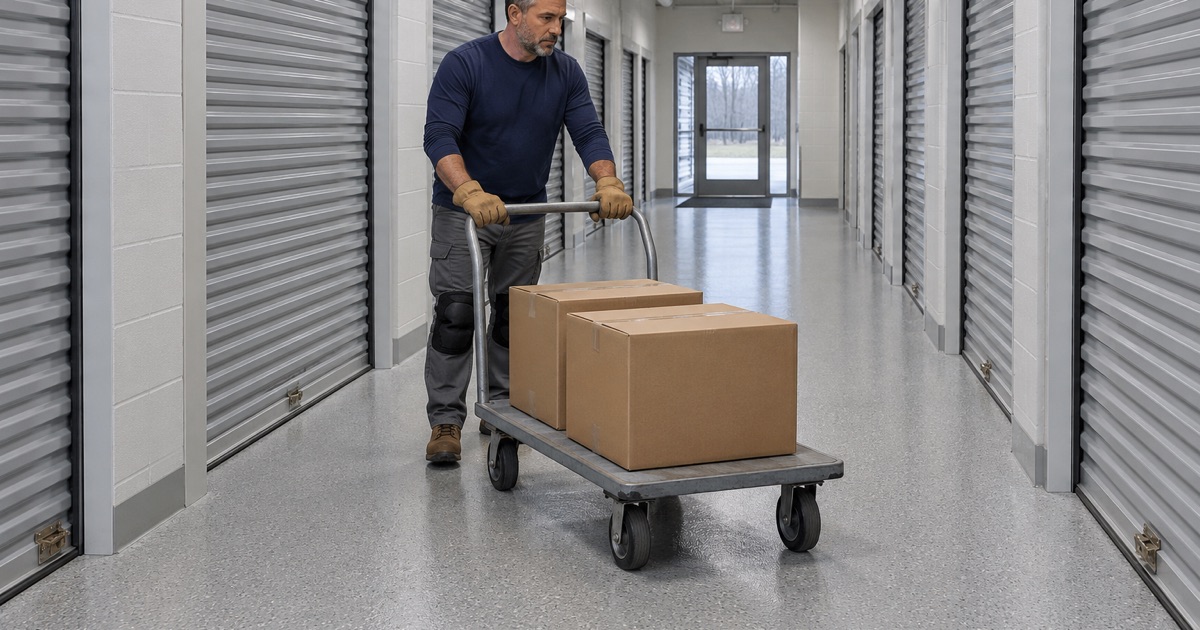
Stockrooms, receiving areas, janitor closets and mechanical rooms rarely get attention until the bare concrete starts dusting onto inventory or soaking up spills. A solid color epoxy with a light texture seals the slab, brightens the room and makes spills easy to mop. Receiving areas that see pallet jacks get a thicker build and filled joints so the edges do not chip.
Building the System for Commercial Use
Base Coats, Broadcasts and Topcoats
Most commercial floors start with a 100% solids epoxy base for bond and build, followed by a vinyl flake or quartz aggregate broadcast, and a polyaspartic or polyurethane topcoat for abrasion resistance and color stability. Each layer and the finished thickness are written into the proposal, so the floor can be checked against what was quoted.
Slip Resistance and Safe Walking Surfaces
OSHA’s walking-working surfaces rule, 29 CFR 1910.22, expects employers to keep floors clean, dry and free of hazards, and a slick floor near a door or sink is a hazard. We tune texture by zone, using more grip at entries, restrooms and wet areas and a smoother finish where carts roll. Walk-off mats at entries finish the job in winter.
Building Code and Inspections
Commercial construction in Wisconsin follows the 2021 International Building Code as adopted through SPS 361, and a new tenant space or change of use may bring an inspector into the room. When a floor is part of a larger project, we coordinate with your general contractor and ask the local building department whether the floor work triggers anything before we schedule it.
Preparation in Occupied Buildings
Removing Old Flooring and Grinding
Existing tile, VCT, carpet adhesive and old coatings are removed and the slab is ground with diamond tooling or shot blasted to the profile the system needs. We never acid etch. Grinding dust is collected at the machine with industrial vacuums, and slurry is bagged on site rather than washed into a floor drain or storm sewer.
Removing old flooring often reveals cracks, patches and old adhesive that were hidden for years. We read those as we go and tell you plainly if an area needs repair before it can be coated.
Moisture Testing
Commercial slabs, especially those that were covered with vinyl or carpet, can carry moisture that the old flooring hid. We test with calcium chloride testing to ASTM F1869 or in-situ relative humidity probes to ASTM F2170 and choose a moisture-mitigation primer where the readings call for one. Moisture from below heads the exclusions on most coating warranties, and we cover those before the job is sold.
Working After Hours
We phase commercial floors into sections, work evenings, overnight or on weekends, and schedule each section’s return to service in writing. Fast-curing polyaspartic topcoats let many areas reopen the next morning. We also check slab temperature and the dew point spread before each coat, because a cold building on a winter weekend can slow curing and change the plan.
- 20+ Years on Concrete
- Moisture Testing in Every Scope
- Written Contract Before Any Deposit