New Berlin Epoxy Flooring has spent more than 20 years on epoxy flooring in Burlington and across southeast Wisconsin, and kennel, daycare and pet-room floors are among the most demanding jobs we take on. Those rooms are mopped and sanitized several times a day, and the floor keeps taking the wet work long after the dogs go home. A coating that looks fine on day one can still fail at the seams where moisture and odor get in.
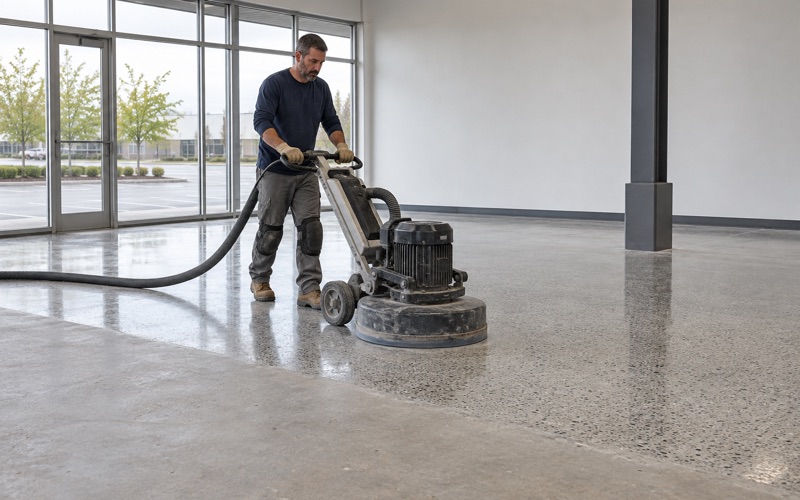
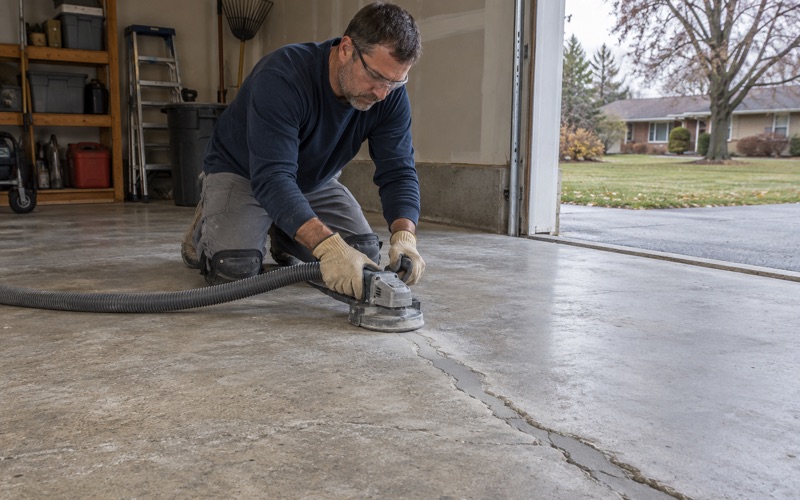
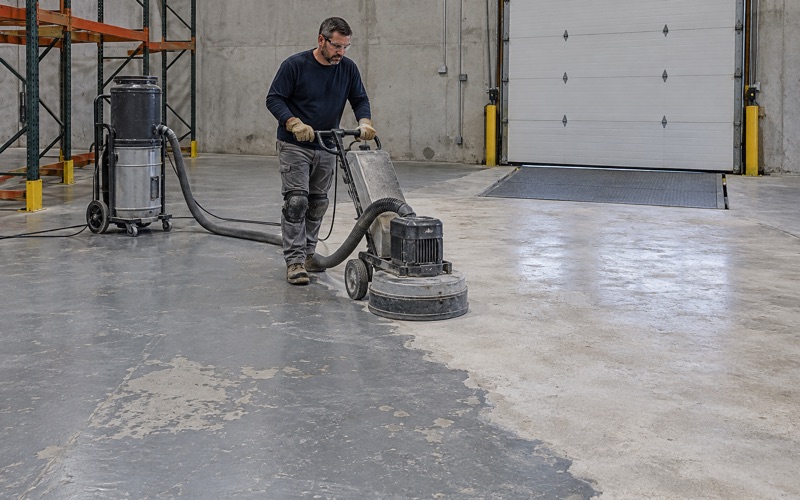
Our approach starts below the surface. We open every slab with a diamond grinder or shot blaster, never with acid, so the resin bonds to sound concrete rather than to a film of residue. Before anything is applied we read the cracks, the joints and any old coating, and we tell an owner plainly when a slab needs repair before it is worth coating at all.
This page covers what a boarding floor in Burlington has to do and why. It walks through a recent city review of a dog daycare building, what the conditions on that approval put on the indoor floor, and why urine and bare concrete make a bad pair. It closes on how we build a seamless, nonabsorbent system that stands up to a facility’s daily sanitizers.
A Dog Boarding Building Reviewed Like a Vet Clinic
No Doggy Daycare in the Zoning Code
At its June 9, 2026 meeting, the City of Burlington Plan Commission took up a conditional use permit and site plan for 2365 S. Pine Street. The applicant proposed a new dog daycare, boarding and pet care building as a second location of The Barking Lot of Lake Geneva. The site is a 1.4-acre B-1 Neighborhood Business lot across from the Burlington Public Water Utility building.
The staff report noted something worth knowing for anyone planning a pet business here: doggy daycares are not a defined land use in Burlington’s zoning code. The city planner reviewed the use instead as sufficiently similar in character to a veterinary office. That finding lets the commission attach conditions meant to keep potential nuisance characteristics in check.
The Enclosed-Building Condition
The veterinary comparison carries a specific rule with it. Burlington allows veterinary clinics as conditional uses provided that no service, including the boarding of animals, is offered outside of an enclosed building. Measured against that standard, boarding is an indoor activity, and whatever happens overnight happens inside the walls rather than in a run or yard.
For a flooring contractor, that sentence matters more than any other in the packet. When the zoning code ties animal care to an enclosed building, the indoor slab becomes the surface that carries the use. The outdoor yards get drainage for liquid waste, but the rooms where dogs sleep and play depend entirely on what is under their feet.
What the Approved Plan Describes
The plan calls for a 7,200-square-foot building with three separate fenced areas behind it and a maximum of 100 dogs. Dogs are kenneled indoors overnight, and supervised outdoor activity runs only from 9 a.m. to 6 p.m. Staff are on site from 6 a.m. to 7 p.m., and the applicant describes dogs rotating between indoor and outdoor areas through the day.
The commission approved the permit and site plan with one exception, for removing a parking-lot island bed. The zoning administrator noted the applicants had run a similar facility for seven years with no complaints on record. The packet does not say what finish the new building’s floors will carry, and that choice belongs to the owner and their builder.
Looking for epoxy-flooring closer to Cedarburg? See Epoxy-Flooring Services in Cedarburg.
Boarding Indoors Puts the Wet Work on the Floor
Kenneled Indoors Overnight
Up to 100 dogs kenneled indoors overnight means every accident between closing and morning lands on the kennel floor and sits there until staff arrive. Hours of contact is a very different exposure from a quick spill in a garage. The liquid has time to find every pinhole, open joint and worn patch, and to soak into whatever it reaches.
Daytime use adds to it. With dogs rotating between the yards and the indoor rooms, the indoor floor takes wet paws, tipped water bowls and accidents, and it carries all of the activity outside the outdoor play hours. A kennel floor in a building like this is effectively a wet room that is also expected to look and smell clean to every owner at drop-off.
Cleaning and Sanitizing Through the Day
The applicant’s narrative says dog waste is cleaned immediately from both indoor and outdoor areas, and that all spaces are cleaned and sanitized regularly throughout the day using pet-safe products. That is a sound operating plan. It also describes a floor that is wetted with cleaning solution many times a day, every day of the year.
Repeated wet cleaning is hard on the wrong floor. Sealers that sit as a thin film wear through in traffic lanes, and some products soften or haze under particular cleaners. Once the film is gone, each mopping pushes diluted waste and cleaning solution into bare concrete instead of lifting it off a sealed surface.
Odor Is the Nuisance the Conditions Guard Against
The staff report lists a condition that animal waste be cleaned up promptly and disposed of in sealed containers to avoid odor nuisances. Burlington’s zoning standards ask that a conditional use not be hazardous, harmful, offensive or otherwise adverse. For a boarding building, odor is the likeliest way to become offensive to the neighbors, and much of it starts at the floor.
Why Urine and Bare Concrete Do Not Mix
Concrete Behaves Like a Sponge
Concrete looks solid, but it is full of capillary pores. Urine that lands on bare or worn concrete wicks into those pores, and the salts and compounds it carries stay behind when the surface dries. Mopping cleans the top, yet the odor keeps returning from below, especially when humidity rises or the floor is wetted again.
That is why a boarding floor cannot rely on a quick sealer or a coat of paint over the slab. Once urine has reached the concrete, a coating applied over the contaminated surface can lose its bond. The goal is to close the slab off before dogs ever use the room, with a system thick enough that nothing passes through it.
Joints, Cracks and Worn Edges
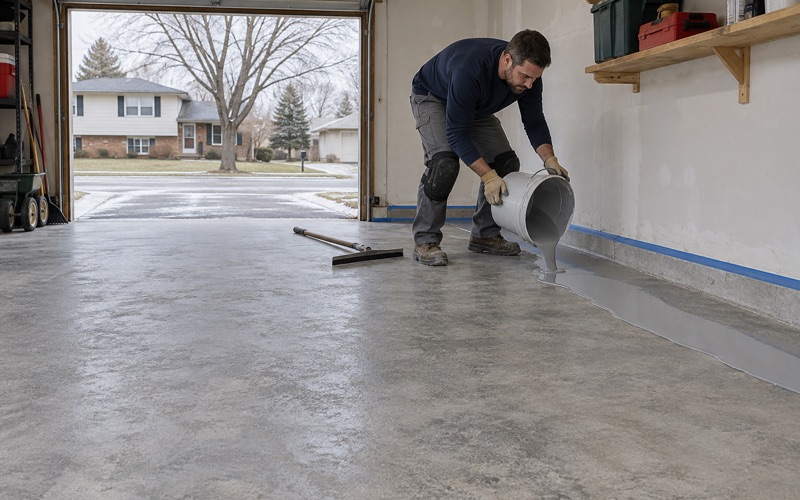
Seams are where most boarding floors fail first. A saw-cut control joint, a hairline crack or a chipped coating edge collects liquid and holds it below the surface, where no mop reaches. We fill joints with a semirigid filler and treat cracks before any coating goes over them, so the finished surface runs continuous across the room rather than stopping at every line in the slab.
Old coatings get the same scrutiny. A peeling sealer or a garage-grade paint left under a new system becomes the weak layer, and any lifted edge opens a path back to the concrete. We grind it off to sound substrate and the ICRI surface profile the primer calls for, rather than coating over a film whose bond we cannot vouch for.
Moisture Testing Before We Seal
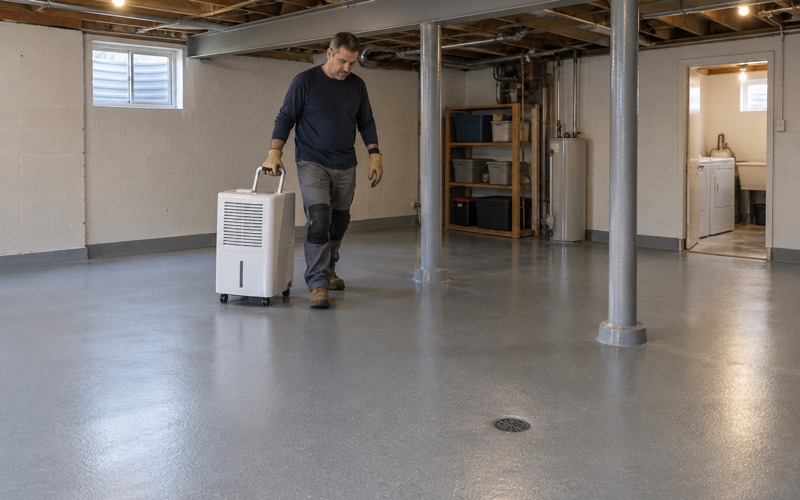
A sealed floor also traps whatever is coming up through the slab. Moisture vapor pushing from below can blister a dense coating, and a blister is just another pocket where liquid collects. We write moisture testing into the scope, using ASTM F2170 in-situ relative humidity probes or ASTM F1869 calcium chloride tests, and specify a moisture-mitigation primer where the readings call for one.
We are also plain about what a coating cannot do. A floor coating does not fix water coming up through a slab, and our warranty exclusions are read out before a job is sold, with moisture from below named first. If testing shows a problem the coating cannot answer, we say so before anyone signs.
Seamless Floors That Take Daily Sanitizing
An Integral Cove Base at the Kennel Lines
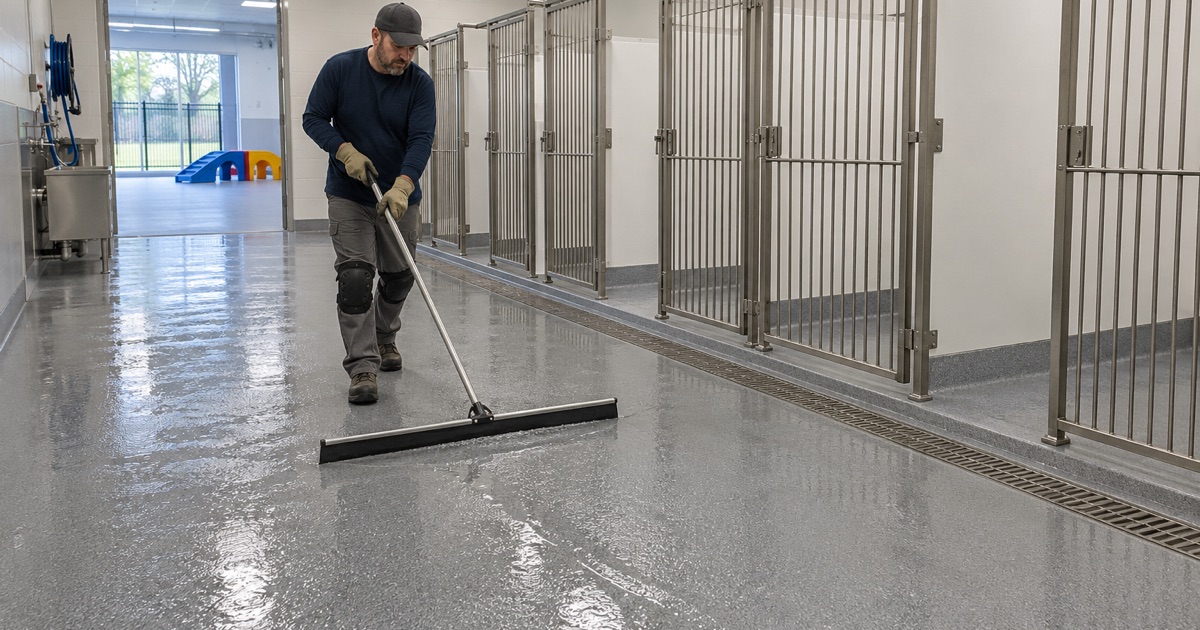
The joint between floor and wall is where kennel liquid goes when it has nowhere else to go. We carry the resin system up the wall as an integral cove base along kennel lines and around play rooms, so there is no corner seam for urine to wick into. The base is part of the floor, not a vinyl strip glued on afterward.
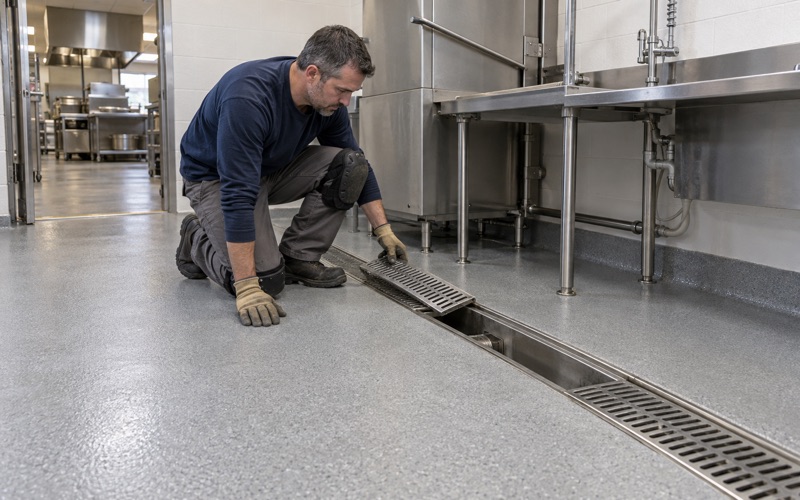
Kennel partitions, door frames and drains get detailed the same way. We terminate the coating cleanly at each one so a mop or squeegee runs across a single continuous surface. That continuity is what lets staff sanitize a room in one pass and walk away knowing nothing is sitting in a crack behind them.
Resin Chosen for the Facility’s Sanitizers
The resin is chosen against the cleaners the facility actually uses. Before we specify a system, we ask for the product sheets on the operator’s pet-safe sanitizers and check them against the coating maker’s chemical-resistance data. A 100% solids epoxy base with a polyaspartic or urethane topcoat is a common build, and urethane cement suits rooms that also take hot-water wash-down.
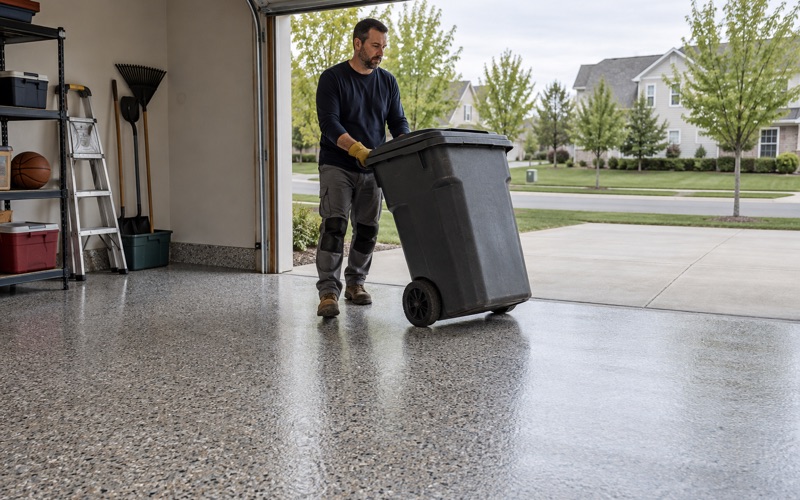
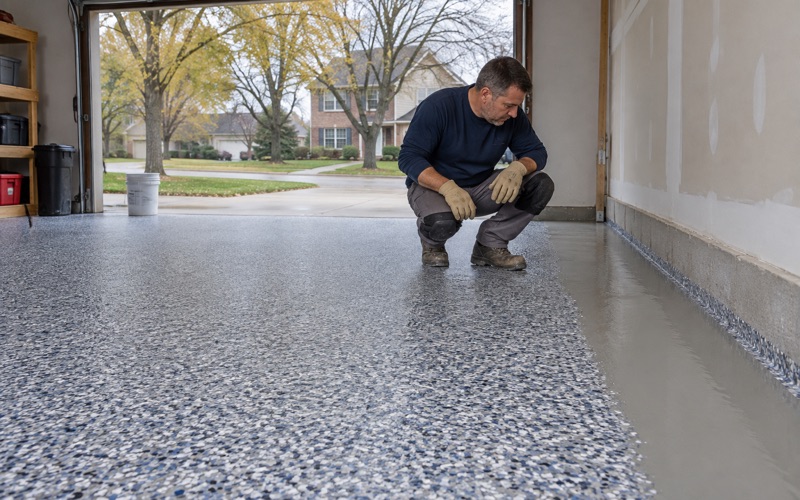
Thickness matters as much as chemistry. A broadcast system with quartz aggregate or vinyl flake builds a dense, nonabsorbent layer that tolerates daily mopping without wearing through in the lanes dogs and staff use most. Our proposal names the product, the system build and the finished thickness, so what was quoted can be checked against what went down.
Permits, Inspection and Scheduling in Burlington
Building inspection in Burlington is handled in-house at City Hall, 300 N. Pine St., where the Building Inspection Department reviews plans and construction under city codes. We ask that office whether a floor job needs a permit before we schedule it. Wisconsin has no state floor-coating license, and the Dwelling Contractor credential applies only to pulling one- or two-family permits.
Curing is planned against slab temperature and the dew point at the surface rather than the calendar, which matters in a building with doors opening to outdoor yards. Grinding dust and slurry are collected on site and never washed into a floor drain or storm sewer. For a facility already in use, we plan rooms in phases so kennels can rotate while each section cures.
- 20+ Years on Concrete
- Moisture Testing in Every Scope
- Written Contract Before Any Deposit