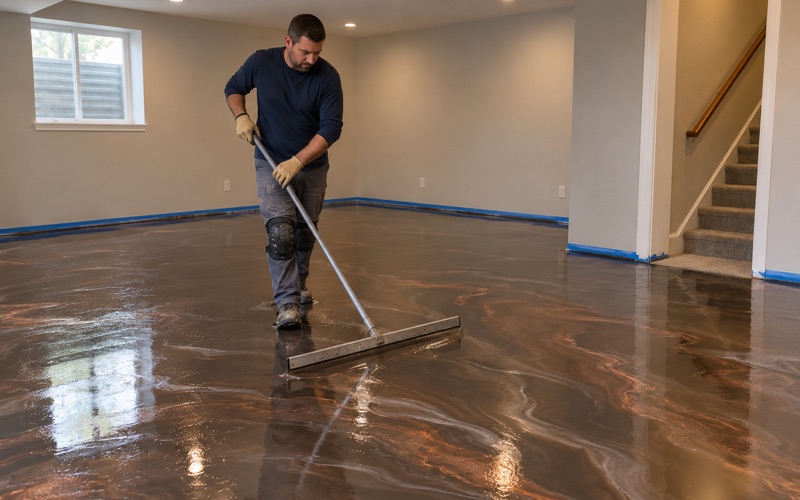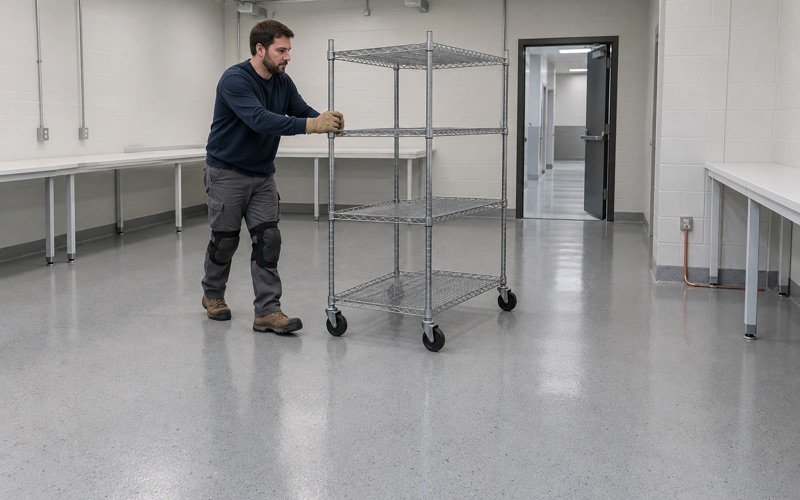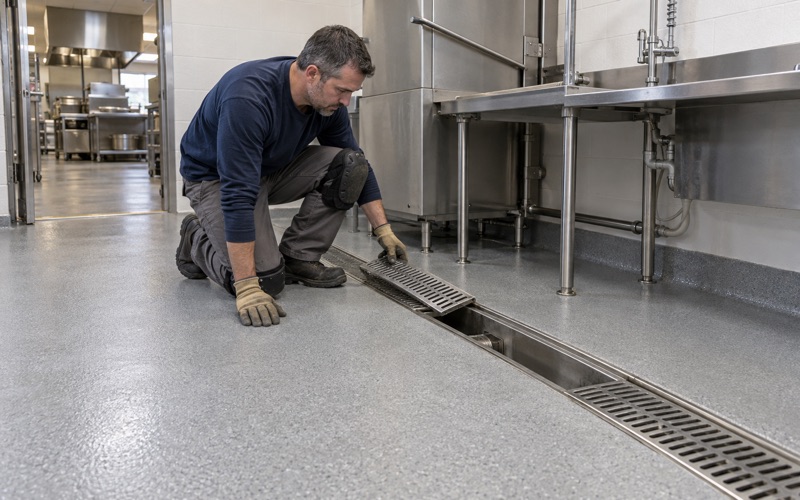
New Berlin Epoxy Flooring brings more than 20 years of epoxy flooring in Brown Deer to every job, and on school, child care and older commercial floors the first thing we look at is not the concrete. It is whatever coating already sits on top of it. Grinding that coating away is the step that can turn a flooring job into a regulated paint job, so we plan for it before we quote.
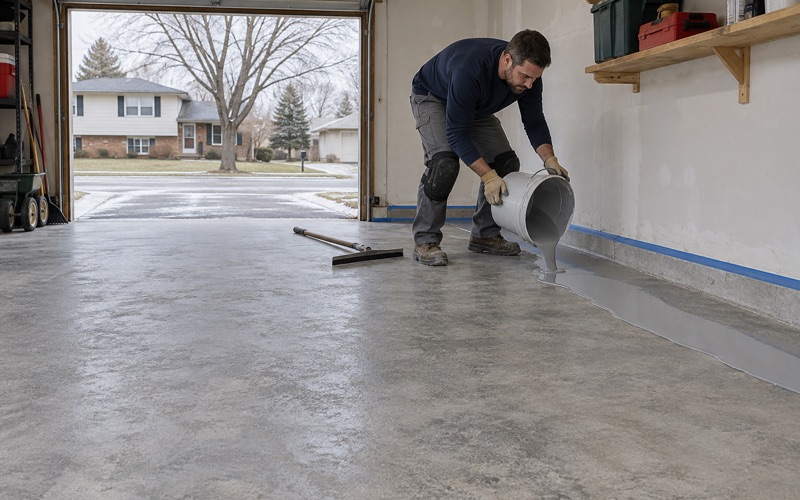
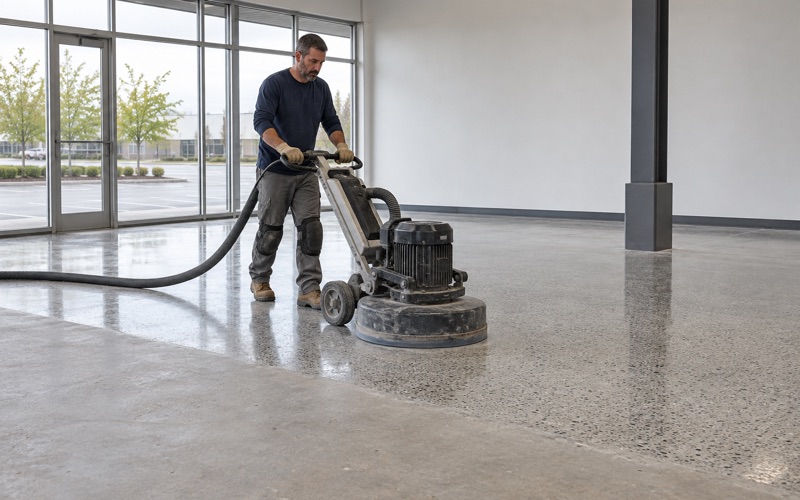
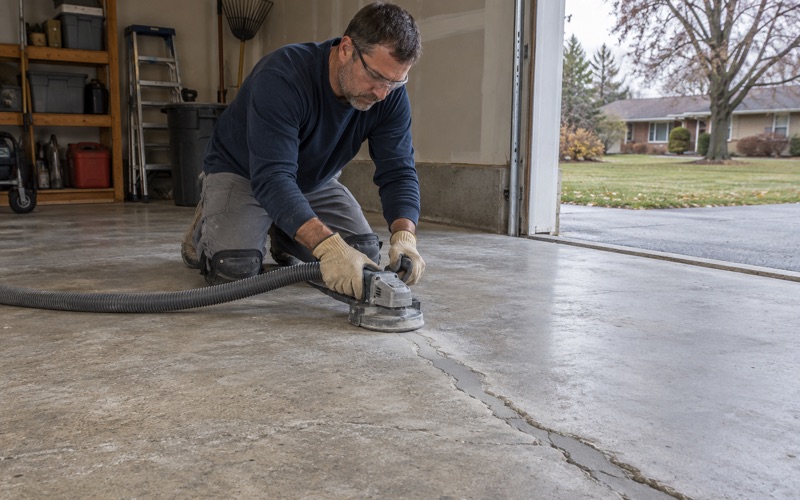
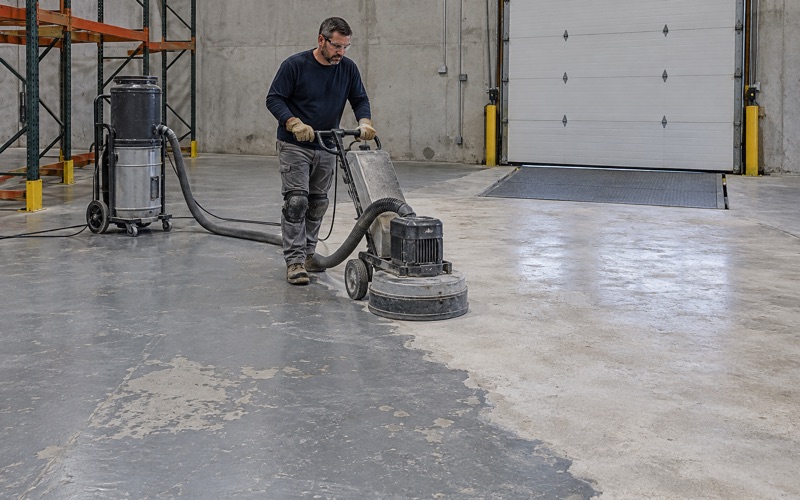
Every slab we coat is opened mechanically, with a diamond grinder or a shot blaster, and we never use acid etching as a shortcut. That profile is what lets a 100% solids epoxy or a polyaspartic topcoat bond for years. It also means the old surface is physically removed as dust and debris, which is exactly why the paint on top matters as much as the concrete underneath.
Our proposals name the product, the system build and the finished thickness, so a facilities manager or a homeowner can check what went down against what was quoted. Before that proposal is written we read the cracks, joints and any existing coating, and we say plainly when a floor needs repair or testing before it can be coated. In a building full of young children, that testing comes first.
Brown Deer Elementary and the Child-Occupied Facility Rule
Brown Deer is a village in Milwaukee County, a suburb of Milwaukee with 12,507 residents at the 2020 census, and its public schools share a central campus. Brown Deer Elementary at 5757 W. Dean Road serves 4K through fifth grade, with morning and afternoon 4K sessions. The building went up in 1967. Those facts together decide how any floor work inside a building like it has to be handled.
Why a 1967 build date matters
Wisconsin’s lead-safe renovation rule, DHS 163, draws its line at 1978. Buildings put up before then date from an era when lead-based paint was still in use, and the rule treats their painted surfaces as suspect until someone qualified shows otherwise. A school built in 1967 sits well inside that window, whatever has happened to its rooms in the decades since.
We have no record that any floor in Brown Deer Elementary is painted, and nothing we found says the district plans to coat one. The point is narrower than that. If a painted classroom, corridor or basement floor in a building of that age were ever ground or stripped for a new system, the work would start with the questions laid out in the rest of this page.
How 4K brings a school under DHS 163
The Wisconsin Department of Health Services uses a specific term here. A child-occupied facility is a building, or part of one, constructed before 1978 that is a licensed day care, or a public or private school or preschool attended by at least one registered child younger than six. It also covers space the same young child visits at least two days a week, three hours a day and 60 hours a year.
A building does not have to be a preschool to qualify. One registered child under six is enough, and a 4K program means children that age arrive for class every school day. That puts a pre-1978 elementary school with 4K squarely inside the definition, and it means the rule follows any paint-disturbing floor work into its classrooms, corridors and lower levels.
The November 3, 2026 ballot
The School District of Brown Deer has put two questions before voters on November 3, 2026. The capital question asks to borrow $35 million for building repairs, safety and accessibility upgrades, including roofs, parking, heating and cooling equipment, boilers, windows, classroom updates, pool repairs and field, track and theater improvements. The operating question would let the district exceed its revenue limit by $2.8 million a year for five years.
The vote has not happened, and nothing on this page assumes how it will go. What we can say is practical: if classroom updates move ahead after the election, any floor work tied to them in a pre-1978 building with young children starts with a paint test rather than a grinder. Planning that sequence early keeps a summer schedule from slipping.
Looking for epoxy-flooring closer to Richfield? See Richfield Epoxy-Flooring.
Old Floor Paint and Who Can Clear It
DHS 163 regulates renovation, repair and painting done for pay in pre-1978 dwellings and child-occupied facilities. Indoors, the threshold is disturbing 6 square feet or more of painted surface per room. Floor preparation clears that bar almost at once: a diamond grinder or shot blaster removes the whole surface of whatever it touches, and one classroom floor is many times the size of the trigger.
Grinding paint is disturbing paint
A painted concrete floor is a painted surface under the rule, just as a wall or a door frame is. Grinding it to profile, stripping it chemically or scarifying it to remove a failed coating all break that paint into dust and chips. Unless the coating has been shown not to be lead-based, the job is treated as disturbing paint from the very first pass of the machine.
Only a certified inspector or risk assessor decides
DHS is direct on this point: only a certified Lead Risk Assessor or Lead Inspector can verify whether a surface presents a lead hazard. A flooring contractor’s opinion does not count, and neither does a test kit swabbed on one corner of the room. When a painted floor might be lead-based, we recommend the owner bring in a certified inspector before our scope is final.
If the inspection shows the coating is not lead-based, the floor can be prepared as an ordinary renovation. If it shows lead, or if the owner chooses to presume lead rather than test, the work proceeds under DHS 163 practices. Either answer is useful, because it tells us which schedule, containment and cost belong in the proposal instead of leaving everyone to guess.
A certified lead-safe contractor does the work
Any work that disturbs lead paint in a child-occupied facility must be done by a certified lead-safe contractor. Under DHS 163 the individual doing the work holds certification and works for a company that is certified as well. When a Brown Deer school or child care floor needs that credential, the proposal says who holds it before anyone sets a start date or orders material.
Signs, Plastic and Notice Before the Grinder Starts
The work practices for a child-occupied facility begin before any equipment comes off the truck. DHS asks administrators to notify building occupants, families of children and the Department of Health Services before work begins. Contractors also hand occupants the EPA renovation guide ahead of the job, so families hear about the work from the school before they ever see a crew in the building.
Notice sets the calendar
In a school, the administrator’s notice is the step that fixes the dates. Families need time to read it, and DHS needs to hear about the work before it begins rather than after. We build that lead time into our schedule, which usually means a floor planned for a summer or holiday break gets discussed with the district weeks ahead of the day our crew arrives.
Marked work zones and plastic underfoot
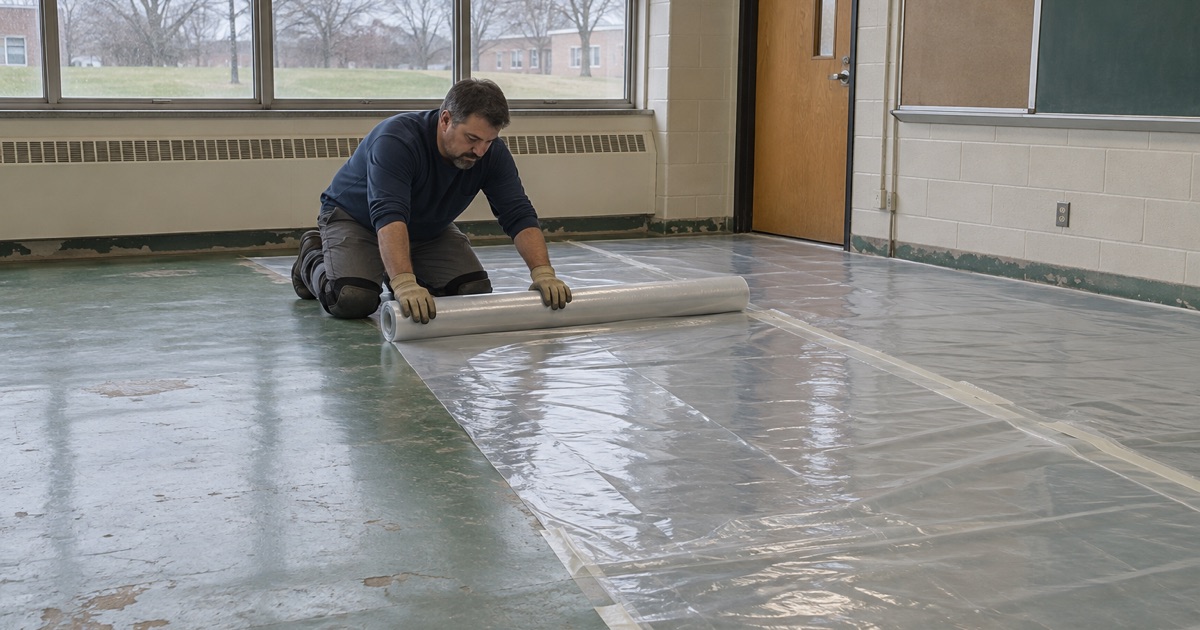
Work zones in a child-occupied facility are clearly marked with signs, and plastic is laid out to capture debris. The signs describe the work and the anticipated completion date, and they stay posted while work is ongoing. For floor prep, the zone covers the room being ground plus the path out of it, so dust is not carried down a hallway on boots or cart wheels.
Our own dust and slurry handling runs underneath those requirements on every job. Grinding dust is collected at the machine and bagged on site, and wet slurry is never washed into a floor drain or a storm sewer. In a room that may hold lead-bearing paint, that habit is not an extra step; it is the baseline the whole containment plan is built on.
Cleanup before the primer
Dust from paint removal has to be gone before a new system goes down, because a primer laid over residue seals it into the floor. We schedule cleanup, and any verification the owner’s inspector asks for, between grinding and priming. Then the coating is cured against slab temperature and the dew point spread at the surface rather than a calendar date picked weeks earlier.
Moisture testing stays in the scope as well. A floor that carried paint for decades can hide damp concrete, so we run ASTM F2170 relative humidity probes or an ASTM F1869 calcium chloride test once the old coating is off. Warranty exclusions are explained before the job is sold, with moisture coming up from below named first among them.
Brown Deer School, Child Care and Home Floor Questions
Most calls we take from Brown Deer are not about schools at all. The village covers about 4.4 square miles of land, with a large share of detached houses and a sizable stock of apartment buildings, and the same paint question can follow the work into many of them. Here is how it plays out on the floors people ask us about most often.
Painted basement floors at home
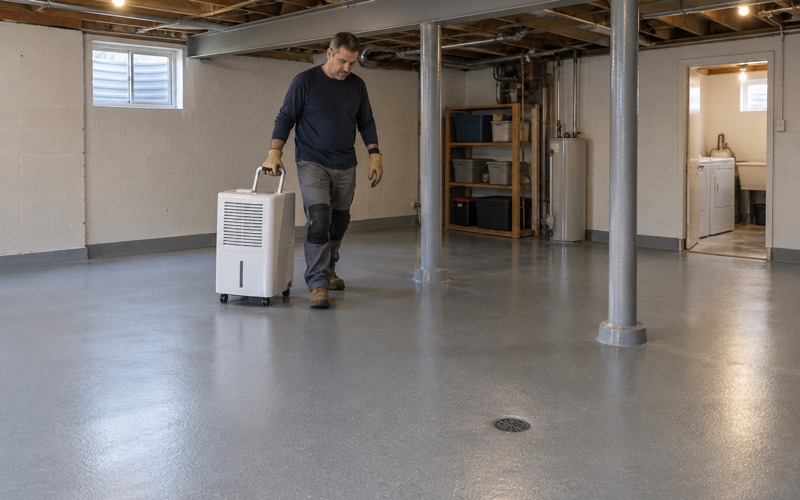
DHS 163 covers dwellings built before 1978 as well as schools and child care centers. A basement floor in a house of that age that was painted gray or red years ago is a painted surface under the rule, and grinding it for an epoxy system is renovation work when we are paid to do it. We raise the question of a lead inspection before the first estimate.
Every home job also gets a written contract before a deposit is taken, with the products, the schedule and any warranty written into it, in line with Wisconsin’s ATCP 110 home improvement rules. If the painted floor turns out to be lead-based, the contract reflects the extra containment and cleanup up front instead of springing it on the homeowner partway through the job.
Garage floors and winter salt
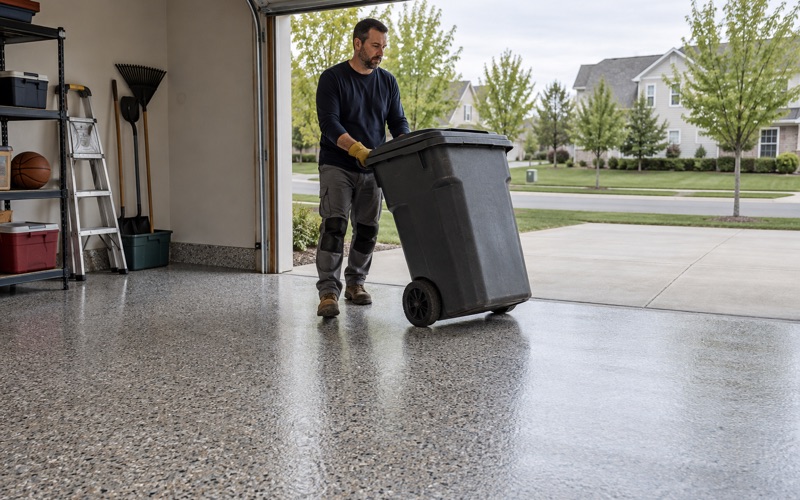
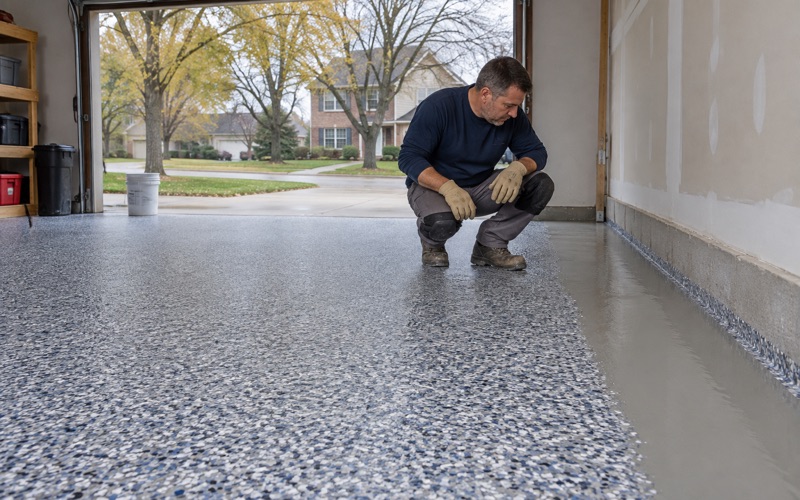
An attached garage floor brings problems that have nothing to do with paint. Road salt and calcium chloride brine ride in on the tires all winter, and Wisconsin’s dwelling code does not require a vapor retarder under an unconditioned attached garage slab, so a dry-looking floor is not proof of a dry one. We test first, then build with a flake broadcast and a polyaspartic topcoat that resists hot tire pickup.
Day cares and preschool rooms
The child-occupied facility rule reaches well past the elementary campus. Any licensed day care in a building that predates 1978 qualifies, and so does a preschool room inside an older church or office building, even when the rest of the building is something else. Before we price floor work for a child care operator, we ask when the building went up and which rooms the children use.
Who to call first
For a school or child care floor the order is simple: the administrator confirms the building’s date and who attends, a certified inspector or risk assessor checks any painted surface, and then we scope the system. Permits are a separate question, and before a commercial or institutional job is scheduled we ask the Village of Brown Deer Community Services Department at 4800 W. Green Brook Drive whether one is needed.
- 20+ Years on Concrete
- Moisture Testing in Every Scope
- Written Contract Before Any Deposit