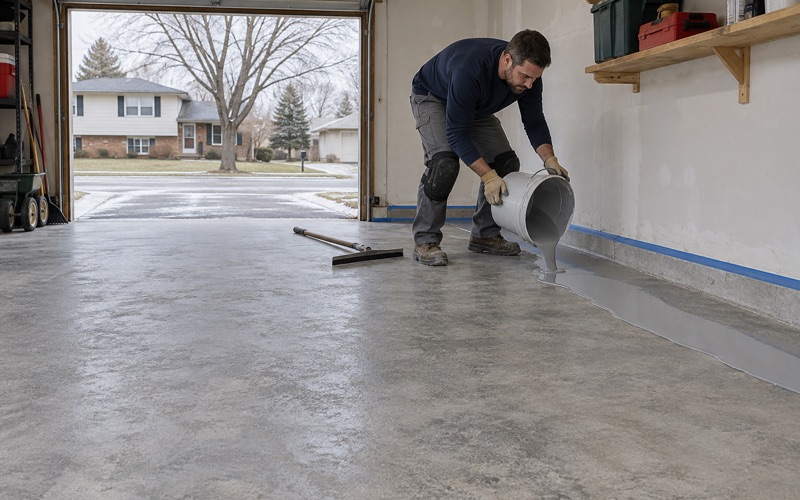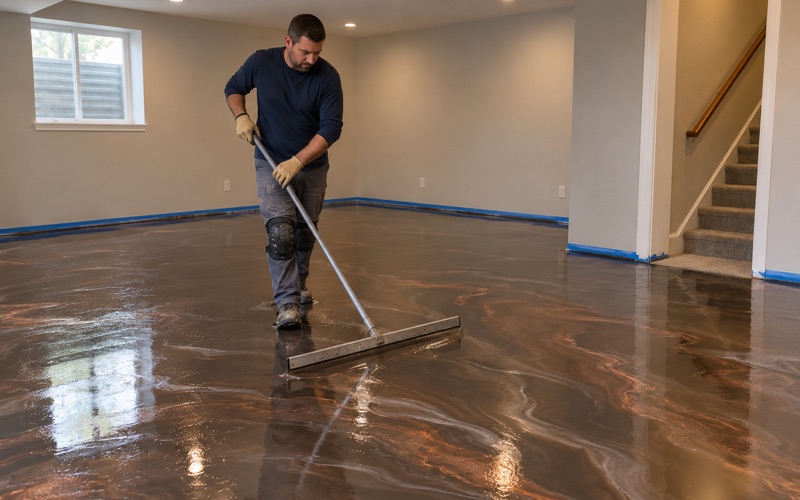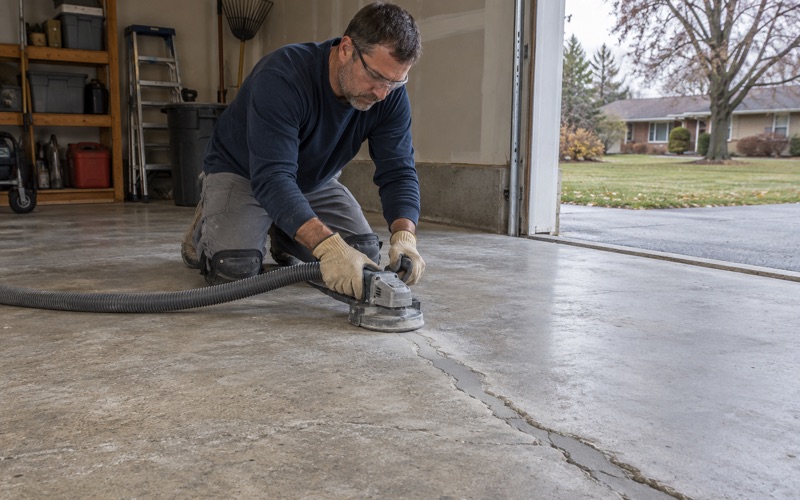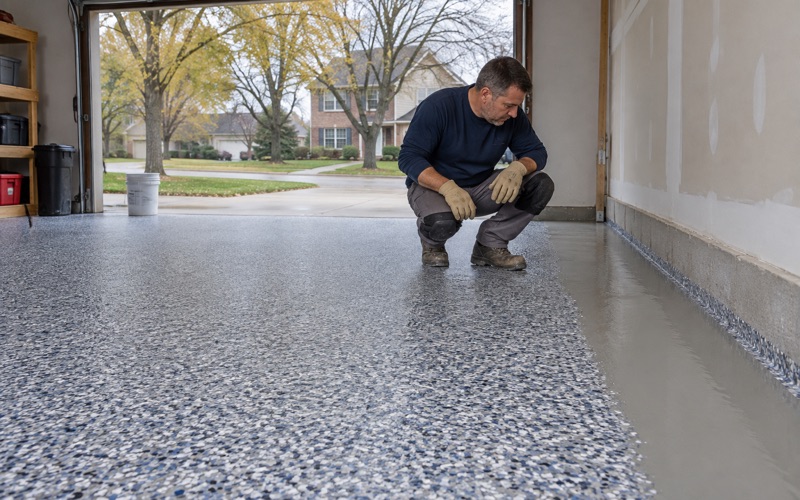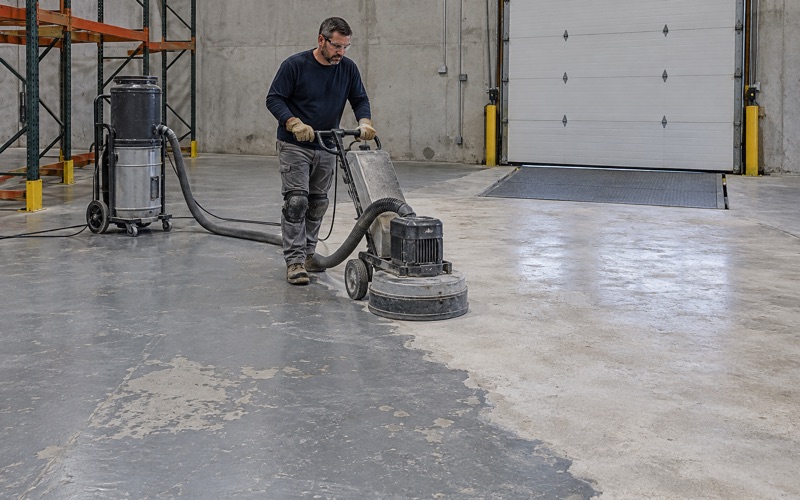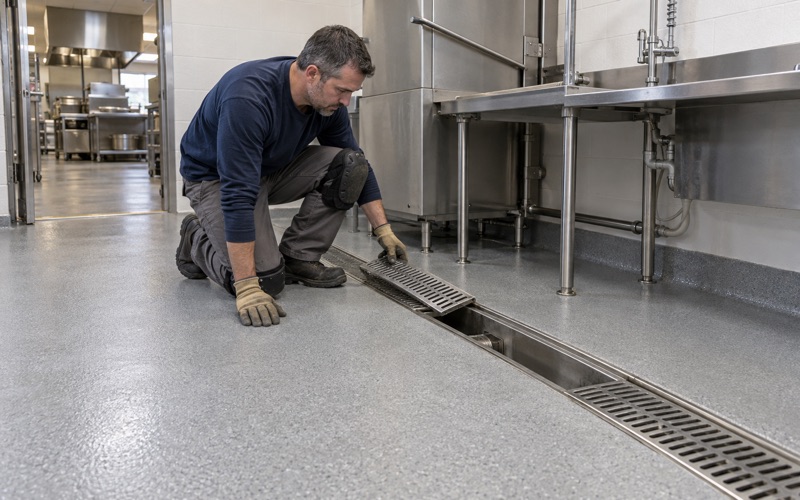
New Berlin Epoxy Flooring has spent more than 20 years putting down epoxy flooring in Bay View garages and basements, and every one of those slabs was opened with a diamond grinder or a shot blaster first. We do not acid etch. A coating bonds to a surface profile in the ICRI CSP range its product calls for, and etching leaves that profile to chance on a slab nobody has measured.
Before a price is set, we read the cracks, the control joints and any old coating already on the concrete. If the slab needs repair or replacement before it can carry a 100% solids epoxy or a polyaspartic topcoat, we say so plainly. The written proposal then names the product, the system build and the finished thickness, so you can check what was quoted against what actually went down.
Moisture testing is part of that scope from the first visit, not an upsell after a floor has blistered. On a good share of jobs here, though, the harder question is paperwork: whether the floor sits inside a larger rehabilitation that the state has to see before anything starts. That question decides when a coating can go on, even though the coating itself earns nothing back.
Bay View’s Historic District and the State Homeowner Credit
Bay View is a neighborhood of the City of Milwaukee on the Lake Michigan shore, south of downtown and north of the City of St. Francis. It was an independent village for eight years, from 1879 to 1887, and much of it now carries a National Register listing. That listing is what opens the door to a state income tax credit for some owner-occupants planning work on their homes.
329 Contributing Buildings Around the Old Iron Works
The Bay View Historic District was listed in the National Register of Historic Places on Aug. 23, 1982, under reference number 82000686. It is roughly bounded by Lake Michigan, Meredith, Superior, Nock, Wentworth, Pryor, Clair, the railroad tracks and Conway Street. The Wisconsin Historical Society describes an industrial suburb that grew around the Milwaukee Iron Company, with 329 contributing and 10 non-contributing buildings.
Contributing is the word that matters to a homeowner. A house on a district street is not automatically a contributing building, and we have not checked the status of any individual address. The Wisconsin Historical Society holds that record, and it is the first thing an owner weighing the credit should confirm before planning a roof, a furnace or a floor around it.
Twenty-Five Percent Back on Approved Rehabilitation
Wisconsin’s Homeowner’s Historic Rehabilitation Tax Credit returns 25 percent of approved rehabilitation expenses as a state income tax credit. The home must be a personal residence that is listed, contributes to a listed district, or has been determined eligible. An owner must spend between $10,000 and $40,000 on eligible work within a two-year period, and the Wisconsin Department of Revenue decides how any credit applies on a return.
Five Categories, and a Floor Is Not One of Them
State law limits eligible work to five categories: the exterior, the interior of a window sash when the exterior is also worked, structural elements, heating and ventilating systems, and electrical wiring or plumbing systems, not fixtures. Roof replacement and exterior painting fall in the first category. Site work such as driveways and landscaping is excluded, even though it happens outside the house.
A basement or garage floor coating sits outside all five categories. It is finish work on an interior slab, so a 100% solids epoxy, a vinyl flake broadcast or a polyurea topcoat adds nothing toward the credit. We tell owners that before we write an estimate, because the coating still has a part to play on the application, which is where most of the confusion starts.
Looking for epoxy-flooring closer to Downtown Milwaukee? See Downtown Milwaukee Epoxy-Flooring.
Approval Before Work, Covering All of the Work
The state’s 2025 program instructions are blunt about timing. Per state law, an owner must receive signed, written approval from the State Historic Preservation Office before work begins in order to receive the credits. For a flooring contractor, the line that matters most comes a little later in those instructions, and it turns on a single word: all.
SHPO Reviews the Work That Earns Nothing
The instructions say SHPO must review ALL work for compliance with the Secretary of the Interior’s Standards, even if it is not eligible for tax credits or the owner does not plan to claim credits for it. They add that all work must be reviewed and approved by the reviewers before work begins. A coating scheduled in the middle of a credit project is part of that work.
That rule binds owners who are using the program, on the project they put in front of SHPO. An owner who never applies is outside it, and the National Register listing by itself does not regulate the inside of a private house. The question we ask at the first visit is simply whether a credit project is planned, underway or recently finished.
Listing the Coating as Ineligible Work
Part 2 of the application asks for ineligible work to be listed with an estimated cost for each item. That covers work planned for the current project that is not eligible rehabilitation, and work on the building finished in the year before applying. A floor coating belongs on that list, priced, beside the eligible roof or wiring work it shares the project with.
Our proposal makes that line easy to fill in, since it already names the product, the build and the finished thickness, and the price is fixed in a written contract before a deposit is taken. The instructions also ask for interior photos of work areas and manufacturers’ literature for replacement materials, which we can supply for the slab. We do not prepare or file the application itself.
Amendments When Materials or Methods Change
If an approved item changes in materials, methods or cost, the instructions require an amendment, with written approval before the changed work. On a floor, that could happen when a moisture reading comes back high and the system shifts to a moisture-mitigation primer, or when a flake finish becomes a quartz aggregate broadcast. Either change waits for approval before we install it.
That is one reason we test before the application goes in rather than after. ASTM F2170 in-situ relative humidity probes or an ASTM F1869 calcium chloride test settles the build early, so the system SHPO reviews is the one we put down. The state recommends applying about two months before the start date, which leaves time for testing to finish first.
Garages, Basements and the Contributing-Building Test
Where the coating goes in the house changes how it reads on paper. A garage and a basement are treated differently by the program, and a local designation still under discussion in Bay View covers something else again. Getting each one straight early keeps a floor from holding up a roof or furnace job that does qualify, and keeps the application honest.
The Garage Footnote
The instructions carry a footnote on garages and outbuildings. For this program, rehabilitation work on a garage or other outbuilding is eligible only if that building is documented as a contributing historic building to the property. A garage built long after the house may not be, and in that case even its roof or structural repairs earn no credit.
Whether the garage contributes or not, the coating on its slab is still not eligible work. What changes is whether the garage is part of the historic property SHPO is reviewing at all. We ask the owner to confirm that status before we build a schedule, and we leave the documentation itself to the owner and the Wisconsin Historical Society.
Basement Slabs Inside a Credit Project
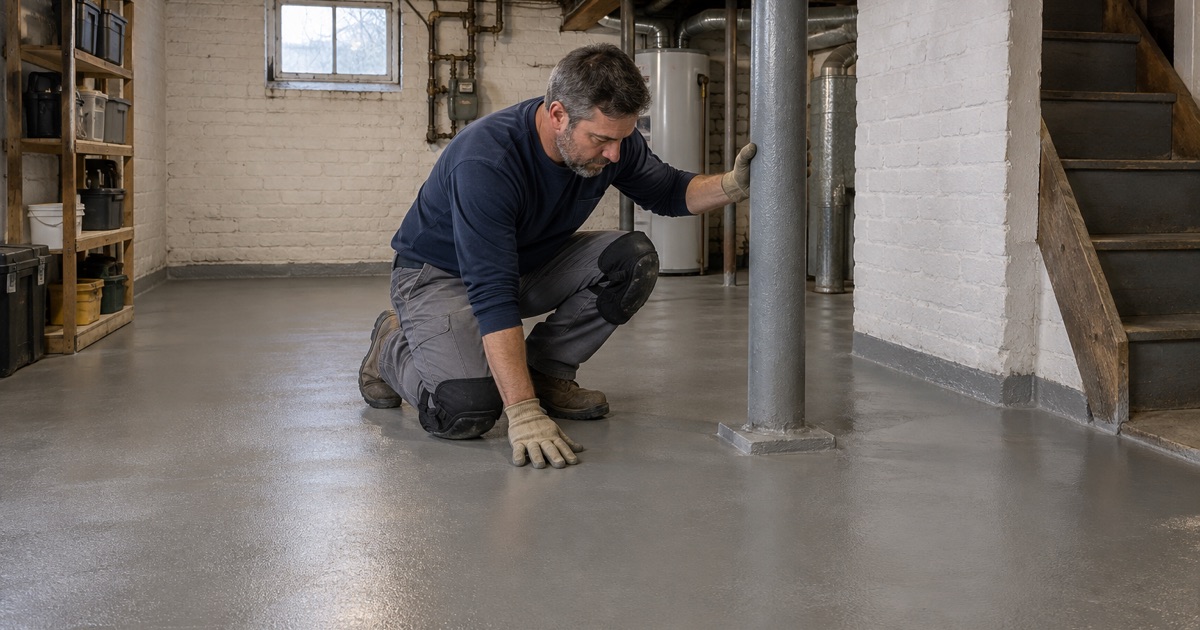
Basements are where a credit project and a coating most often meet, because eligible plumbing, electrical and heating work happens down there. When a furnace or a drain line is replaced, the slab gets cut, patched or exposed, and an owner reasonably wants it coated before the room is used again. The order on paper matters as much as the order on site.
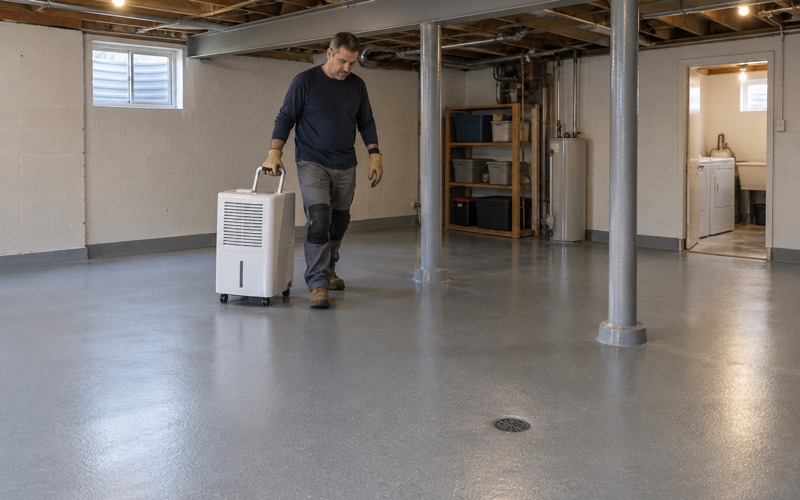
We do not sell a floor coating as a fix for water coming up through a slab, and every basement gets tested rather than assumed dry. Hydrostatic pressure under the slab and efflorescence at the joints and walls both show up in the readings or on the surface. If the results call for a primer system, that decision is made before the application is submitted.
The Local District That Has Not Been Decided
Bay View’s local designation is narrower and separate. A 2021 filing sought a South Superior Street Puddlers’ Cottages Historic District covering seven homes on the 2500 block of S. Superior St., and as of October 2025 the City of Milwaukee had not decided. City certificates of appropriateness govern exterior changes such as re-roofing, re-siding and window replacement, not interior floors.
Bay View Floor Questions We Answer Up Front
Does the Coating Earn Anything Back?
No. The coating is not one of the five eligible categories, so it is listed as ineligible work with its own cost and reviewed with the rest of the project. We never promise an approval or a credit amount, and the Department of Revenue decides eligibility. What we can promise is a written scope that makes the application line accurate and easy to check.
Does the Floor Work Itself Change?
The floor work does not change. The slab is still diamond ground or shot blasted, never acid etched, and grinding dust and slurry are collected on site rather than washed into a floor drain. Warranty exclusions are read out before the job is sold, with moisture from below named first, whether or not a credit project is involved.
What changes is the calendar. An approved project cannot start the coating early just because a crew is free, and a change in the system after approval waits on an amendment. We set the schedule around the approval date first and the slab second, which keeps the floor from becoming the item that delays an eligible roof or furnace job.
When Can the Coating Go Down?
Once approval is in hand, curing is scheduled against slab temperature and the dew point spread at the slab surface, not the calendar. Coating a slab that sits too close to dew point invites amine blush on an epoxy and a weak bond underneath. An unheated garage waits for spring when it has to, approval or not.
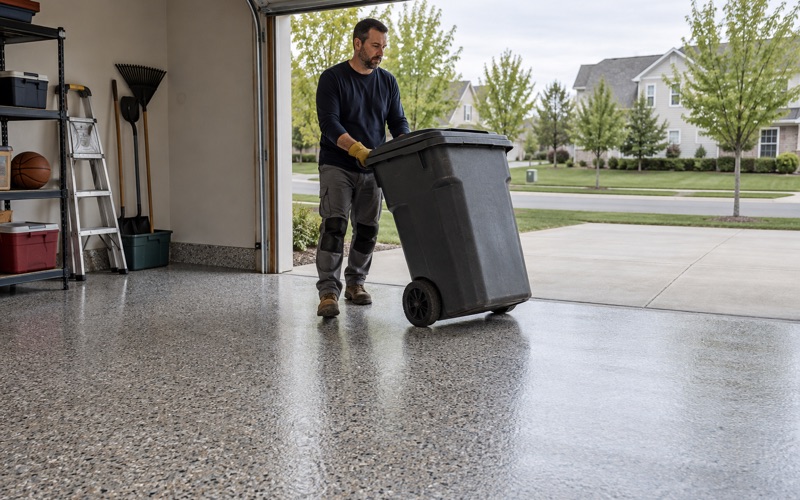
Garage systems are built for the road salt and calcium chloride brine that winter tracks in on tires, with a topcoat chosen to resist hot tire pickup. Basement systems are built around the moisture readings taken earlier. Either way, the floor goes in once the paperwork allows it and the slab is ready, in that order.
- 20+ Years on Concrete
- Moisture Testing in Every Scope
- Written Contract Before Any Deposit